The regulatory landscape for batteries has undergone a fundamental transformation. The old Battery Act (BattG) of 2009, which distinguished between only three types of batteries, is now a thing of the past. With the EU Battery Regulation and the German Battery Act Implementation Act (BattDG) – in effect since October 2025 – new rules apply.
Of particular importance to manufacturers, importers, and retailers: the precise classification into the five categories (up from three). Each category entails specific obligations regarding labeling, take-back, and documentation.
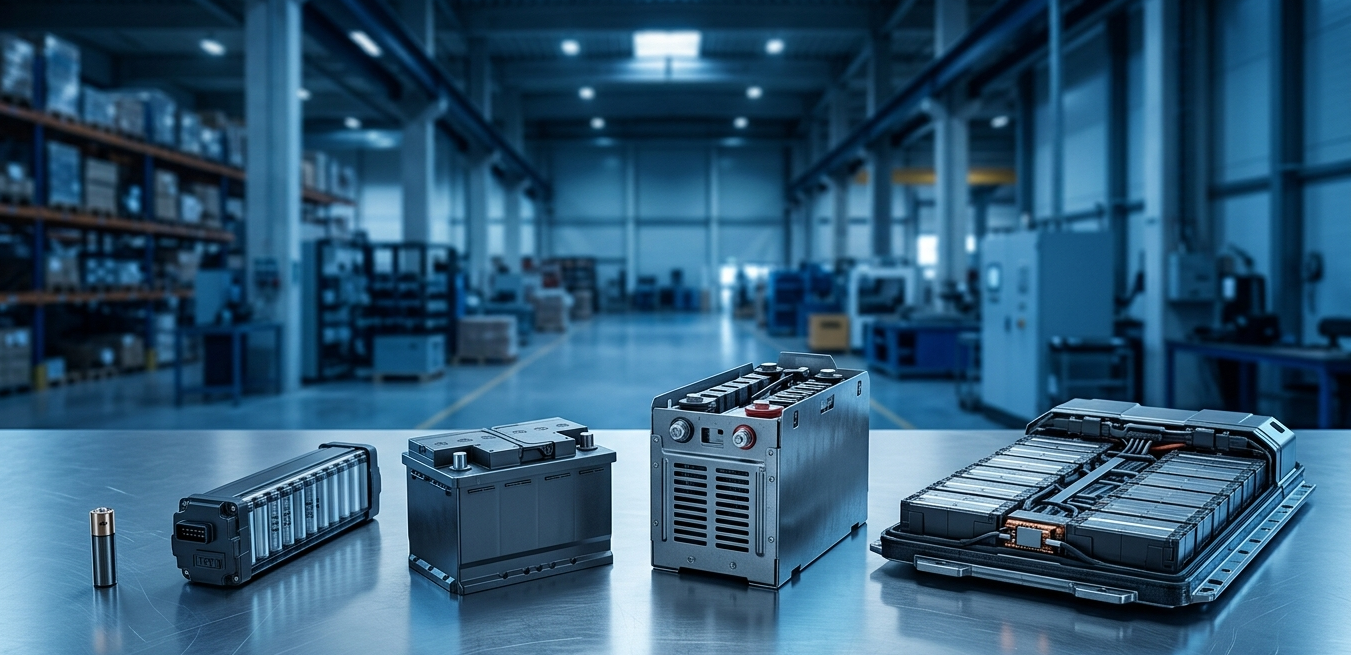
The 5 battery categories
1) Device batteries: Sealed, portable, for household appliances—from AA batteries in remote controls and button cells in watches to rechargeable batteries in smartphones or electric toothbrushes.
2) LMT batteries (Light Means of Transport): The most significant change. Rechargeable batteries for e-bikes, pedelecs, and e-scooters now fall into their own category—previously often classified as industrial batteries, they now have their own transparency and recycling rules.
3) Starter batteries: Classic automotive batteries (SLI—Starting, Lighting, Ignition) for internal combustion engines.
4) Industrial batteries: The “catch-all” category for industrial applications—stationary energy storage systems (e.g., for PV systems), UPS systems in data centers, and batteries for forklifts and industrial trucks.
5) Electric vehicle batteries: Large traction batteries for electric cars, hybrids, and heavy-duty commercial vehicles. They are subject to the strictest requirements regarding carbon footprint and digital battery passports.
Who is responsible for what?
Manufacturers & Importers: Mandatory registration with the EAR Foundation and affiliation with a collection organization. Starting in February 2027, QR code labeling will be mandatory for all batteries; traction batteries will require a digital battery passport starting in August 2026.
Retailers & Distributors (online and brick-and-mortar): Free take-back of used batteries in the specified categories—regardless of whether a new purchase is made. Online retailers must also provide digital information on return options.
End users: Disposal in household waste is prohibited. Return to collection points or retailers. New: E-bike batteries (LMT) can be returned at municipal collection points nationwide.
The Role of the OfH (Organization for Producer Responsibility)
OfH is an authorized collective system that organizes collection and recycling on behalf of manufacturers. Contributions are tiered based on environmental criteria: those who market sustainable and easily recyclable batteries pay less.
As a state-recognized OfH, ECOPV-EU offers the free provision of ADR containers as well as the regular, certified disposal of used batteries from devices.
Contact us for comprehensive advice on your compliance issues relating to electrical and electronic equipment, packaging, batteries, and PV panels.
 www.ecopv-eu.com/en/contact/ |
  E-Mail: info@ecopv-eu.com
 Supported over 20,000 customers with EPR compliance
Rated 5.0 on Google
Contact
We look forward to your message!