
WEEE Categorization
Which category does my electrical appliance fall into?
Correctly classifying your products into the legally defined WEEE categories is essential for compliant registration with the ear Foundation. Since the introduction of “Open Scope,” electrical appliances have been divided into six main categories.
Here is an overview to help you determine your appliance type:
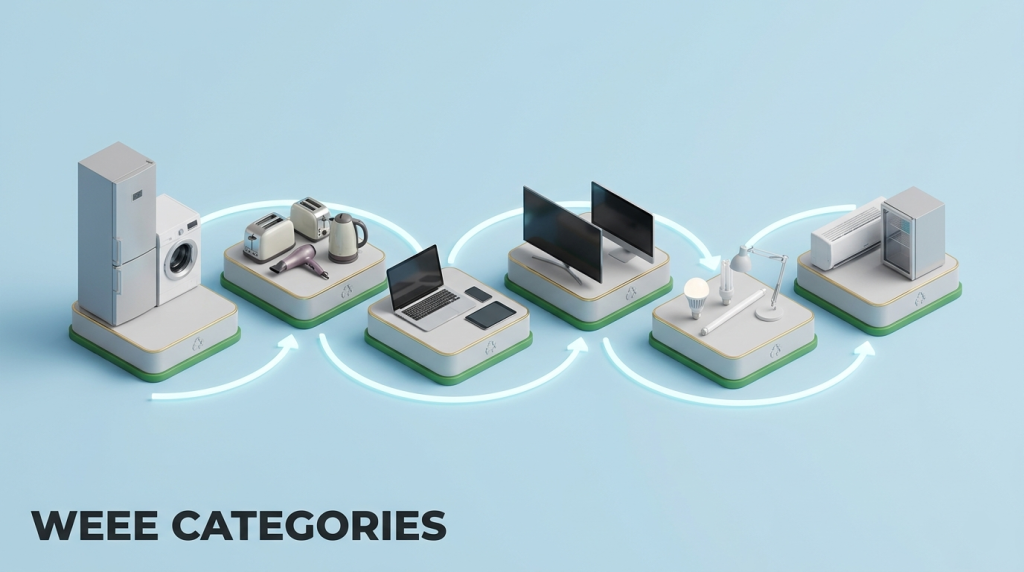
1) Heat Exchangers
This category includes electrical appliances of all sizes with integrated circuits. In these appliances, substances other than water (e.g., gases, oils, coolants, and refrigerants) are used for cooling, heating, or dehumidification.
Examples: Refrigerators, air conditioners, heat pumps.
3. Lamps
Lamps are devices used to produce light. Here, the term specifically refers to the light sources (replaceable components), not the light fixture itself. Characteristics: Usually made of glass, metal, or ceramic with a standardized base (e.g., E27, GU10) for tool-free replacement.
Special: This category also includes light bulbs with additional functions (e.g., built-in speakers or cameras).
5. Small appliances (dimensions ≤ 50 cm)
Appliances whose largest external dimension is 50 centimeters or less and that do not fall under categories 1 through 4 or 6.
Photovoltaic note: Small PV modules for residential use are also classified here.
2. Screens, Monitors, and Devices with Large Displays
This category includes all devices designed to display images and information on an electronic screen (regardless of the device’s overall size).
Important: If a device has a screen with a surface area of more than 100 cm², it falls into this category, provided that its primary purpose is to display images.
4. Large appliances (dimensions > 50 cm)
Electrical appliances with at least one external dimension greater than 50 centimeters that are not already covered by the more specific categories 1 through 3.
Photovoltaics note: Large PV modules typically used in private households (B2C) fall into this group.
6. Small IT and Telecommunications Devices
This category includes devices used to collect, transmit, store, and display information, as well as for the electronic transmission of signals (voice, video, data), provided that no external dimension exceeds 50 centimeters.
Examples: smartphones, routers, small laptops, or GPS devices.
1) Heat Exchangers
This category includes electrical appliances of all sizes with integrated circuits. In these appliances, substances other than water (e.g., gases, oils, coolants, and refrigerants) are used for cooling, heating, or dehumidification.
Examples: Refrigerators, air conditioners, heat pumps.
3. Lamps
Lamps are devices used to produce light. Here, the term specifically refers to the light sources (replaceable components), not the light fixture itself. Characteristics: Usually made of glass, metal, or ceramic with a standardized base (e.g., E27, GU10) for tool-free replacement.
Special: This category also includes light bulbs with additional functions (e.g., built-in speakers or cameras).
5. Small appliances (dimensions ≤ 50 cm)
Appliances whose largest external dimension is 50 centimeters or less and that do not fall under categories 1 through 4 or 6.
Photovoltaic note: Small PV modules for residential use are also classified here.
2. Screens, Monitors, and Devices with Large Displays
This category includes all devices designed to display images and information on an electronic screen (regardless of the device’s overall size).
Important: If a device has a screen with a surface area of more than 100 cm², it falls into this category, provided that its primary purpose is to display images.
4. Large appliances (dimensions > 50 cm)
Electrical appliances with at least one external dimension greater than 50 centimeters that are not already covered by the more specific categories 1 through 3.
Photovoltaics note: Large PV modules typically used in private households (B2C) fall into this group.
6. Small IT and Telecommunications Devices
This category includes devices used to collect, transmit, store, and display information, as well as for the electronic transmission of signals (voice, video, data), provided that no external dimension exceeds 50 centimeters.
Examples: smartphones, routers, small laptops, or GPS devices.
Why is choosing the right category so important?
The choice of category determines the amount of the fees, the type of security deposit required, and the logistical requirements for pickup.
Incorrect registration may result in penalties from the ear Foundation or warnings from the competition authorities.
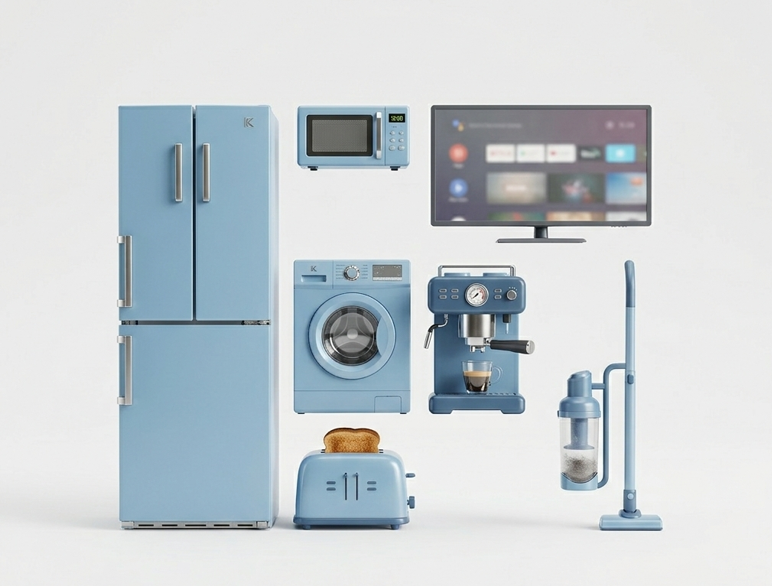
Are you unsure how to classify your products? ECOPV-EU GmbH can help you accurately classify your equipment types to ensure legally compliant WEEE registration.
Contact
We look forward to your message!
info@ecopv-eu.com
+49 6196 5835357
Frankfurter Str. 70-72
65760 Eschborn
Contact
We look forward to your message!