
ECOPV-EU
Your partner for legally compliant EPR compliance

Full-service solutions for WEEE, packaging, and batteries

We ensure legally compliant adherence to Extended Producer Responsibility (EPR) for WEEE, packaging, batteries, and single-use plastics – efficiently and in full compliance.

Your advantage with ECOPV-EU

We serve as your authorized representative, guarantor, and registered OfH all in one. This allows us to ensure your seamless EPR compliance across Europe from a single source.

Authorized Representative

In-house warranty system

Accredited OfH according to the ear Foundation

Your benefits with ECOPV-EU

We represent your company before the ear Foundation in Germany – even if you do not have a registered office in Germany.

As an officially registered authorized representative, we assume legal liability for your WEEE obligations.

We are licensed both as an authorized representative and as a collective guarantor (certified for 2024, 2025, and 2026).

✓ Your Benefit

We use our own, officially recognized collective system. Instead of waiting for approval from an external insurance company or bank, we admit you directly into our pre-approved system.

✓ Immediate Service

Since all administrative processes are handled in-house, we issue your certificates immediately without any external delays. This significantly speeds up your registration with the ear Foundation and ensures you gain market access as quickly as possible.

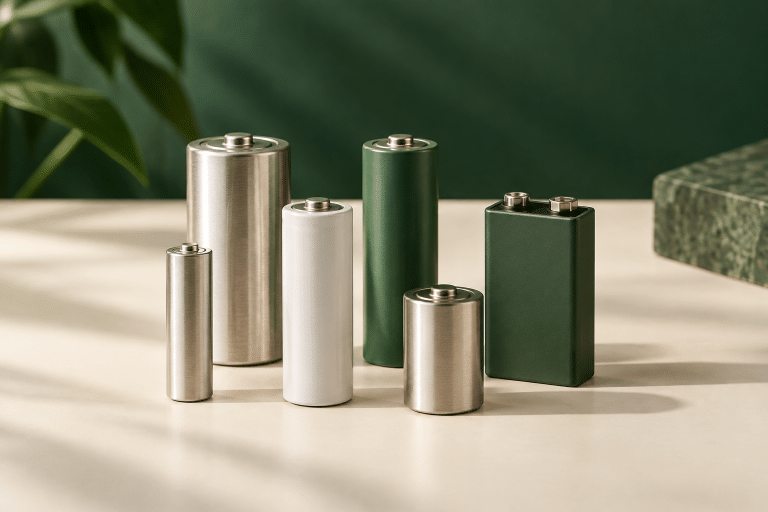
Under the new German Battery Act (BattDG) and the EU Battery Regulation, manufacturers are required to join a collective system.

ECOPV-EU is one of the few authorized organizations for producer responsibility (OfH) in Germany. We handle the entire operational process of collecting and recycling your used batteries.

Welcome to ECOPV-EU

Your EPR compliance from a single source: Legally compliant and stress-free

Anyone who places electrical appliances, packaging, or batteries on the market is subject to Extended Producer Responsibility (EPR).


We offer comprehensive, one-stop services to help you efficiently meet EPR requirements in the areas of WEEE (Waste Electrical and Electronic Equipment), packaging, batteries, and single-use plastics.


As part of our EPR Full Service & Compliance offering, we provide you with expert, personalized, and comprehensive advice. We support you in the operational implementation so that you can focus entirely on your business goals.


NEW!

ECOPV-EU: Officially authorized collection point for used batteries!


 As a state-recognized organization for producer responsibility (OfH), ECOPV-EU GmbH is your certified partner for battery recycling.
We guarantee manufacturers legally compliant fulfillment of their take-back obligations and offer collection points free pickup and proper disposal of used batteries in accordance with the highest environmental standards.

01.

Step 1: Sign up for free

Register a collection or take-back point easily and free of charge:

02.

Step 2: Receive confirmation & equipment

After registering, you will receive your confirmation of participation, appropriate collection containers, and all safety information.

03.

Step 3: On-demand pickup

We’ll take care of the free pickup and proper recycling of your used batteries.

OUR SERVICE

Electrical and electronic equipment

ECOPV-EU provides expert support to help you comply with German regulations. In addition to the BattDG and VerpackDG, we naturally also assist you with the ElektroG4 and, as part of our EPR Full Service & Compliance package, handle the complete implementation and administration for your company.


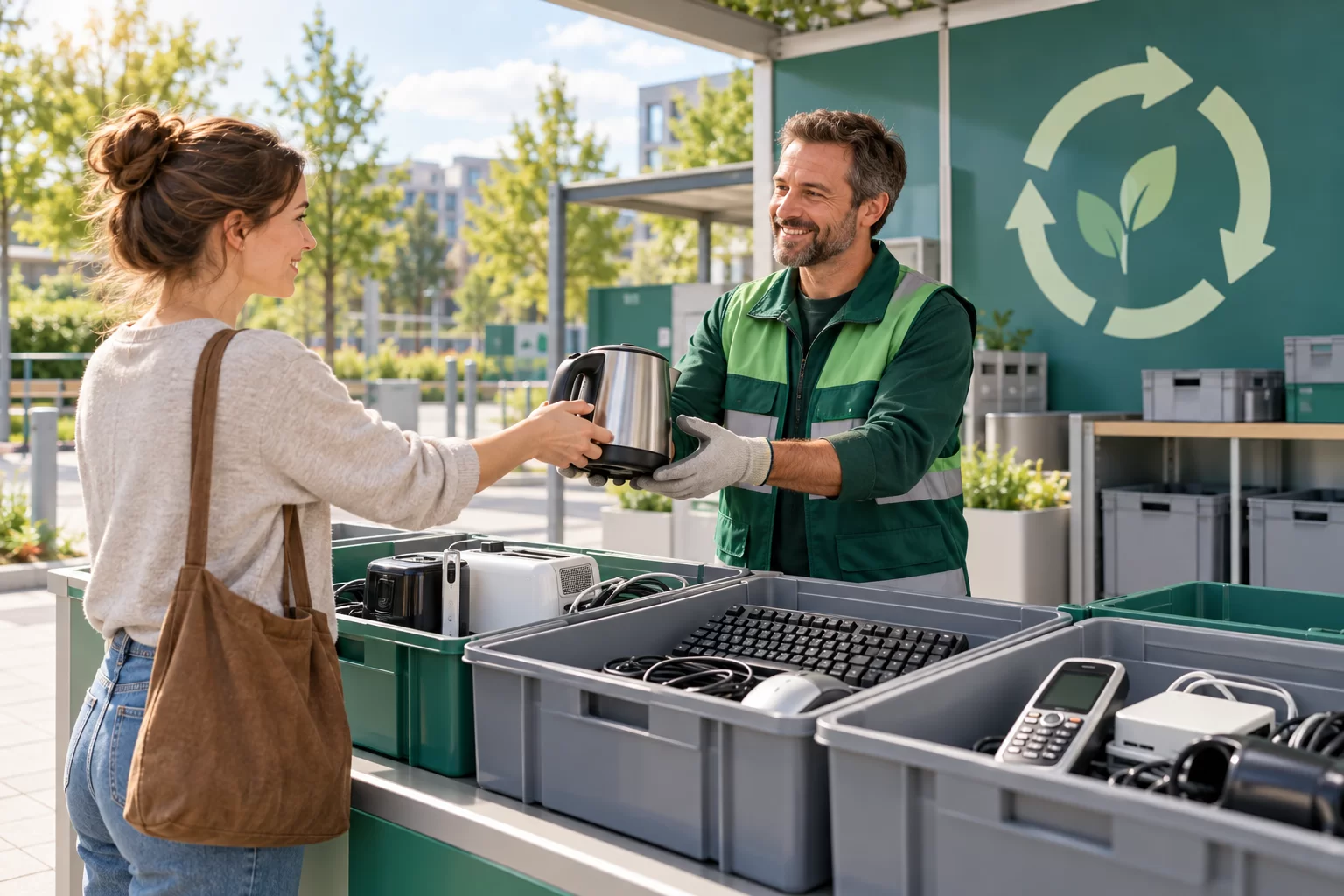
Our ElektroG4/WEEE services cover everything involved. Aside from submitting the required quantity data to us for the EAR Foundation, you can sit back, relax, and let us do the work for you.

  • Registrations: Under the ElektroG4, manufacturers must register their electrical appliances with the ear Foundation by category and brand (see Products_WEEE_Appliance Categories). As proof of compliant registration, manufacturers receive a so-called WEEE number.
  • Quantity Reports: The ElektroG4 requires manufacturers to submit quantity reports for each WEEE number, i.e., regarding the electrical appliances placed on the market.
  • Annual reports: Manufacturers are required to submit annual reports on the collected waste equipment.
  • Insolvency-proof guarantee: The ElektroG4 requires manufacturers to provide an insolvency-proof guarantee for the financing of the disposal of each WEEE number.
  • ear collection coordination: Manufacturers must ensure that waste equipment is properly collected and disposed of as needed.

Battery

ECOPV-EU offers you a full-service solution, which includes complete registration with the Stiftung Elektro-Altgeräte Register (Stiftung EAR) as well as reporting to a battery take-back system for all manufacturers subject to the Battery Act (BattDG).


Future reporting obligations are also handled with ease: each manufacturer simply reports the quantities to be declared to us, and we handle all further procedures with the Stiftung EAR on your behalf.

  • Registrations: As with the ElektroG4, the BattDG requires registration with the ear Foundation. Batteries are categorized here by type and chemical system.
    Additionally: A separate registration must be filed with a self-collection system. This ensures a fair distribution of costs for the collection, sorting, and treatment of used batteries taken back nationwide, based on the volume of input.

  • Volume reporting: Depending on the selected battery take-back system and your own products, the volumes placed on the market must be reported monthly, quarterly, or simply annually.

Packaging

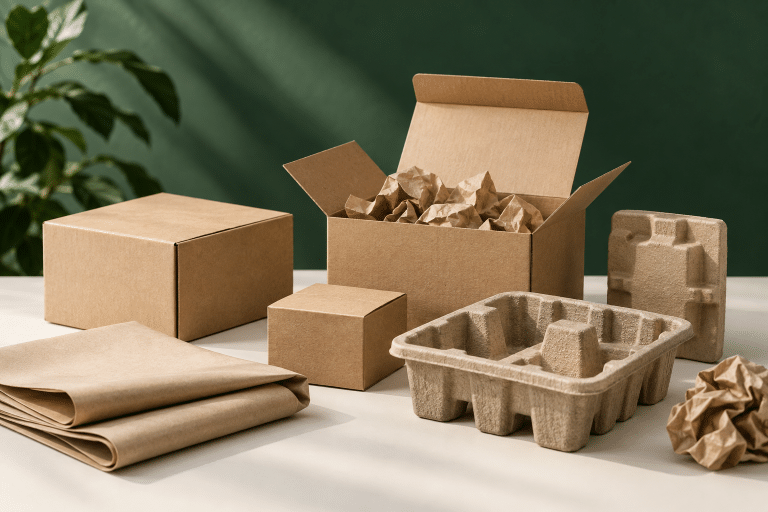
Unlike under the ElektroG4 and BattDG, registration for the VerpackG must be completed with the Central Packaging Register Foundation (LUCID), and participation in a nationally approved dual system is required.

Of course, we’ll handle this for you, including the volume reports required by the system.


Important outlook: With the upcoming PPWR (EU Packaging Regulation), this system will be harmonized across Europe starting in 2026, which will bring new requirements for recycling-oriented design and labeling.

  • Reporting requirement: Registration with the Central Packaging Register Foundation (LUCID).

  • System participation: Manufacturers must participate in a dual system or submit a declaration of compliance.

  • Licensing: Manufacturers pay licensing fees for their packaging to finance the waste management infrastructure.

  • Volume reporting: Monthly, quarterly, or annual reporting of the quantities of packaging placed on the market to the dual system.

  • Recyclability: Packaging must meet minimum requirements for recyclability.

Single-use plastic

ECOPV-EU offers you full-service support for Germany’s Single-Use Plastics Fund Act.

This includes both full registration with DIVID, the Federal Environment Agency’s platform for the plastics fund, and support through a dual system.


In this way, we ensure that you meet all extended producer responsibility requirements in a legally compliant and efficient manner.

  • Authorized Representative: Foreign manufacturers without a branch in Germany must appoint an “authorized representative” to fulfill their obligations under the EWKFondsG and to provide relevant information during the registration process.

  • Registrations: Similar to the VerpackDG, manufacturers must also register with DIVID. Brand names of single-use plastic products must be listed during registration.

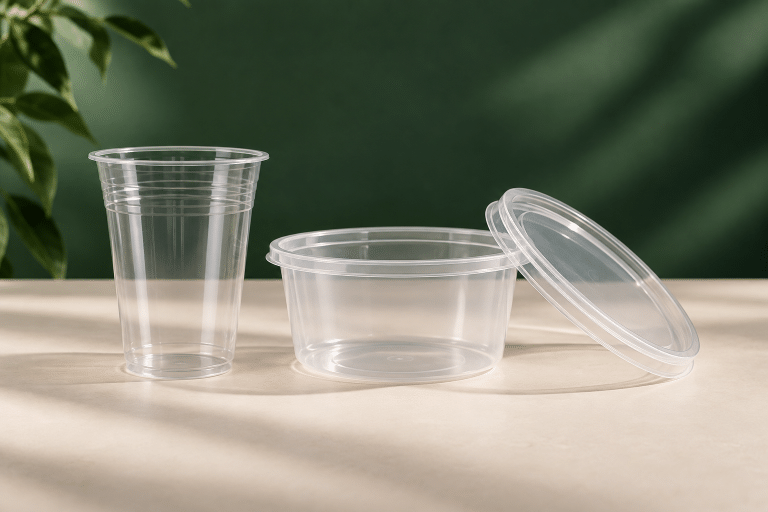
  • Covered single-use plastics: Covered single-use plastic products include food containers, packaging, and film packaging; selected beverage containers; beverage cups; lightweight plastic bags; wet wipes; and balloon and tobacco products with filters.

  • Quantity reporting: According to the EWKFondsG, manufacturers are required to report to DIVID by May 15 of each year the types and quantities of single-use plastic products placed on the market or sold in the previous year, beginning in 2025.

Why ECOPV-EU?

Licensed qualification

As a leading service provider in the field of German EPR compliance, we hold official dual certification (Authorized Representative + Guarantee Qualification) from the German EAR Foundation. We specialize in providing comprehensive solutions for market compliance in Germany for companies based abroad.

EU EPR Compliance Services

We have in-depth knowledge of EPR regulations in the EU market. We thoroughly assess your EPR compliance obligations based on the laws and regulations of the target country and offer tailored solutions to ensure your business operates in an environmentally compliant manner.

Supporting over 20,000 companies

Our EPR compliance services cover the entire process, from registration and reporting to guarantor services and take-back management. With our industry-leading and efficient implementation system, we have successfully provided compliance solutions to more than 20,000 companies.

Competitive prices

We know that every cost factor is critical in cross-border business. As your long-term partner, we will continuously optimize our cost structure and do our best to offer our customers the most competitive prices.

Key figures

Global Clients
250 +

More than 20,000 customers worldwide already rely on our expertise. With offices in Germany (Eschborn), Italy, Denmark, Sweden, France, Belgium, Austria, and Ireland, as well as our presence in China, we work with global partners to provide professional compliance services – with genuine local expertise in every market we serve.

European Clients
153 +

Number of European customers we have helped comply with and implement Extended Producer Responsibility (EPR) for waste electrical and electronic equipment, packaging, batteries, and single-use plastics.

Our Partners

EPR-News & Updates

Stay informed!

FAQ

ECOPV-EU is a specialized service provider for environmental compliance and waste management headquartered in Eschborn, Germany.
The company helps manufacturers and retailers comply with extended producer responsibility (EPR) regulations in the EU.

The three core categories and the EU-wide standard are: packaging, electrical and electronic equipment (WEEE), and batteries and accumulators. In addition, single-use plastics are regulated in Germany under the Single-Use Plastics Fund Act.

Since 2019, Germany’s Packaging Act has governed manufacturers’ responsibility for sales, return, and shipping packaging. The basic principle is that whoever first places packaging on the market commercially is responsible for its collection and recycling.

Starting in August 2026, the Packaging Act (VerpackG), which has been in effect since 2019, will be replaced by the new Packaging Implementation Act (VerpackDG).

The PPWR (Packaging and Packaging Waste Regulation) is the new EU packaging regulation and, together with the VerpackDG (Packaging Implementation Act), will form a regulatory framework starting in August 2026: The PPWR sets the substantive rules for all of Europe (e.g., recycling rates, design, minimum recycled content requirements, and uniform labeling), while the German implementing law, the VerpackDG, is expected to regulate implementation in Germany—such as responsibilities, inspections by the ZSVR, and fines.

It is the party that first makes the packaged goods available in the respective EU country.

New: Anyone shipping directly from a non-EU country to end customers in the EU must have an authorized representative in the destination country who assumes EPR liability.

Stock that was already “placed on the market” (i.e., made available for sale) before August 12, 2026, may be sold off. Stock held solely in the company’s own warehouse that has not yet been registered as a product-packaging unit could become a problem.

This is because all new products manufactured after that date must meet the strict “design for recycling” criteria.

Yes, “sending air” is becoming expensive and illegal. The 50% empty space quota applies to shipping packaging in e-commerce as well as to consolidated shipments.

Important: The ban on artificially inflating volume with fillers (air cushions, paper) is a key aspect of material minimization.

It is not just those who manufacture the products. Anyone who imports electrical appliances into Germany or, as a foreign retailer, ships them directly to end customers is also considered a manufacturer.

The counter model will become mandatory. Consumers will no longer be allowed to dispose of battery-powered devices in collection bins on their own. Disposal must be handled by trained staff at a drop-off counter.

Yes, starting July 1, 2026! Single-use e-cigarettes must be accepted for return free of charge at every point of sale – no matter how small the store is.

Starting in July 2026, a standardized, two-color logo indicating the return of used devices will be mandatory:

In-store: At least A4 size, clearly visible (e.g., at the entrance).
Online: Prominently displayed on the homepage or directly within the checkout process.
On the shelf: Large retailers must also display the “crossed-out trash can” symbol directly at the point of sale.

What matters is not who manufactures the product, but who first introduces it to the German market. This applies to:

  • Domestic manufacturers and bottlers.
  • Importers who bring goods into Germany from abroad.
  • Foreign online retailers who ship directly to German consumers.

The tax applies to, among other things:

  • Food containers for immediate consumption (to-go).
  • Paper and plastic bags and packaging.
  • Drink cups and containers (up to 3 liters).
  • Lightweight plastic shopping bags.
  • Wet wipes, balloons, and tobacco filters.

New starting in 2026: Fireworks are now also subject to the levy, provided they contain plastic.

Mark May 15, 2026, in red on your calendar! By this deadline, the exact weight (in kilograms) of the products sold in the previous year must be reported via the DIVID platform.

No. The requirement applies starting with the first gram.

The new BattDG has been in effect since 2025. It supplements the EU Battery Regulation at the national level.

  • Focus: The regulation no longer covers only disposal, but the entire life cycle (circular economy).
  • Recycling: Significantly higher recovery rates apply to raw materials such as lithium, cobalt, and nickel.

It doesn’t just affect the factories that manufacture batteries.

The following are considered manufacturers under the BattDG:

  • Producers: Anyone who manufactures batteries in Germany.
  • Importers: Anyone who imports batteries (including those in devices such as laptops, e-bikes, or power tools) into Germany from non-EU countries (e.g., China or the U.S.).
  • Quasi-manufacturers: Anyone who sells batteries under their own brand name (private labeling).
  • Foreign retailers without a German branch (in this case, the appointment of an authorized representative is mandatory)

.

Since 2025, the law has distinguished between five categories:

  1. Portable batteries: Household batteries, button cells.
  2. LMT batteries: “Light Means of Transport,” e.g., for e-bikes and e-scooters.
  3. Starter batteries: Conventional automotive batteries.
  4. Industrial batteries: Stationary storage systems, backup systems.
  5. Electric vehicle batteries

To remain eligible for sale, two requirements must be met:

  1. Registration: Every manufacturer must have a valid registration number (Batt-Reg. No.) with the ear Foundation. Without this number, an immediate sales ban applies.
  2. Take-back system: Registration alone is not sufficient. You must join an approved producer responsibility organization (OfH) (e.g., ECOPV-EU). This organization will handle the collection and recycling on your behalf.

Contact

We look forward to your message!

info@ecopv-eu.com

+49 6196 5835357

Frankfurter Str. 70-72
65760 Eschborn

ECOPV-EU on LinkedIn

Connect with us