Anyone selling products in Europe will quickly come across the term EPR (Extended Producer Responsibility). However, one key point is often overlooked: without a registered office in the target country, an authorized representative is required in many cases – or will become mandatory in the future.
While this is standard practice almost everywhere for electrical equipment (WEEE), new EU regulations (such as the PPWR) will make it mandatory for packaging in all member states starting in 2026.
Who needs an authorized representative under EPR?
Under EPR, in many cases, the person who places products or packaging on a national market for the first time needs an authorized representative if they do not have a branch in the country in question. This is the legal definition of a manufacturer in the EPR context. This refers not only to traditional producers but also to other market actors who bring the goods into the respective country for the first time.
This applies in particular to:
- Manufacturers, when they themselves place the goods on the market in a country for the first time
- Importers who import goods from abroad into a country
- Online retailers / remote sellers who sell directly to end customers across borders
- Own-brand owners who distribute products under their own name or brand
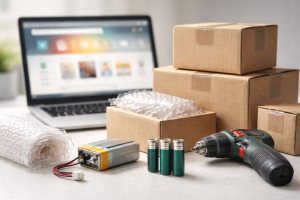
- Shippers who, through cross-border shipping, place packaging (cardboard, filling material, adhesive tape) on the market in a country for the first time.
The decisive factor is therefore:
- not: Who physically manufactured the product.
- but: Who places it on the market in the respective country for the first time and thereby triggers EPR responsibility there.
EPR Categories
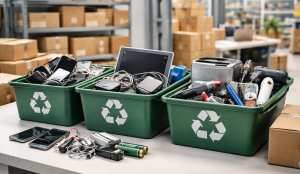
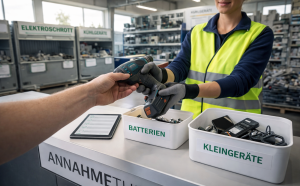
1) Electrical and Electronic Equipment (WEEE): All electrical and electronic devices (including cables, plugs, and rechargeable batteries)
- If you sell electrical and electronic equipment to an EU country where you do not have an established business presence, you need a local WEEE representative.
- Example: A German retailer selling electrical and electronic equipment to Italy without an established business presence there must appoint an Italian representative.
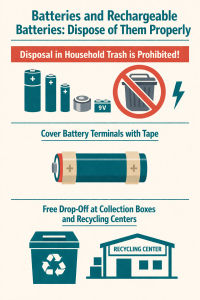
2) Batteries: Single-use batteries and built-in rechargeable batteries
- As of August 18, 2025, manufacturers and certain distance sellers without a registered office in the respective Member State must appoint an authorized representative in the affected countries. In Germany, existing registrations and responsibilities had to be converted to the new requirements by January 15, 2026, at the latest.
3) Packaging: Packaging and shipping materials placed on the market
- If you place packaging on the market abroad, you may be required to appoint an authorized representative there.
- New EU Packaging and Packaging Waste Regulation (PPWR): The PPWR replaces the previous directive and will apply directly in all EU member states as of August 12, 2026.
- Important: Under the new EU Packaging Regulation (PPWR), the appointment of a local authorized representative for cross-border sales will become mandatory throughout the EU.
Which types of packaging are affected?
All of them—without exception:
- Retail packaging (e.g., product packaging)
- Outer packaging (e.g., gift boxes or additional boxes)
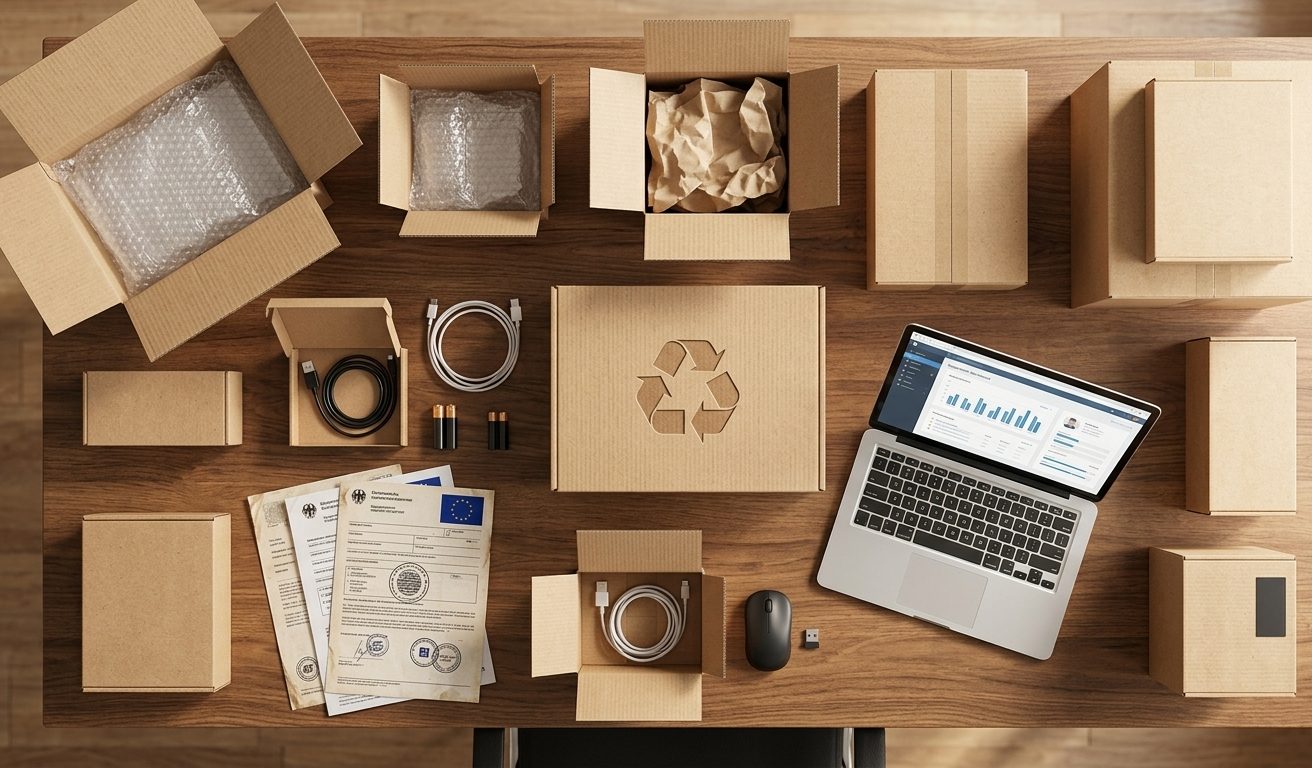
- Shipping packaging (cardboard boxes, tape, packing material)
For the authorization to be legally valid in the LUCID packaging register, these two steps are mandatory:
- Manufacturer: Designates the authorized representative in the LUCID dashboard (providing their ID).
- Authorized representative: Confirms this designation.
The authorization becomes effective only after this mutual confirmation and verification by the Central Office (ZSVR).
How to find the right EPR representative
They act as your local compliance representative and handle the following:
- Registration with national authorities/registers
- Quantity reporting (packaging, electrical equipment, batteries)
- Processing of recycling fees
- Legal liability: They act as the legal representative in dealings with authorities; however, overall responsibility remains with the company.
Why is this so critical?
- Online marketplaces (Amazon, eBay, Kaufland) require EPR numbers and block listings without proof.
- Customs inspections may reject goods without EPR proof, particularly for electrical appliances (WEEE) and packaging.
- B2B customers are increasingly demanding EPR proof.
- In the event of product recalls without valid registration, the company faces increased liability risks.
- Stationary retailers and wholesalers are also increasingly requiring EPR proof from suppliers as a contractual condition. Regulatory inspections (customs, state authorities) can result in fines, delivery suspensions, or product recalls if registration is missing—without valid EPR registration, the company bears sole liability.
How to find the right EPR representative
Take a proactive approach to future-proof your strategy:
- Create a list of countries: Identify all EU member states where you sell products and determine where you first place them on the market.
- Prioritize: Start with high-revenue markets or countries with high compliance and sanctions risks, such as DE, FR, IT, ES, or PL.
- Select a partner: Use national registries, PROs, and specialized EPR service providers to find or coordinate suitable authorized representatives.
- Review offers: Compare scope of services, scope of representation, reporting frequency, prices, notice periods, and formal requirements.
- Contract and power of attorney: Enter into a contract and grant a written power of attorney; be sure to check country-specific formal requirements.
Implementation tip
An authorized representative is always responsible for only one country. Those who sell across Europe should rely on service providers that centrally handle coordination for multiple countries.
Conclusion
EPR requirements are becoming stricter across Europe. Anyone selling across borders must treat producer responsibility as an integral part of their logistics and cost planning.
The current status at a glance:
- Electrical and Electronic Equipment (WEEE): An authorized representative is required if you do not have a local presence.
- Batteries: As of August 18, 2025, appointing an authorized representative is required for shipping batteries to other EU countries if you do not have a local presence.
- Packaging: Currently still a patchwork of regulations (mandatory, e.g., in AT, FR, ES). Starting in August 2026, the PPWR will make an authorized representative mandatory in all EU countries.
Contact us for comprehensive advice on your compliance issues relating to electrical and electronic equipment, packaging, batteries, and PV panels.
 www.ecopv-eu.com/en/contact/ |
  E-Mail: info@ecopv-eu.com
 Supported over 20,000 customers with EPR compliance
Rated 5.0 on Google
Contact
We look forward to your message!