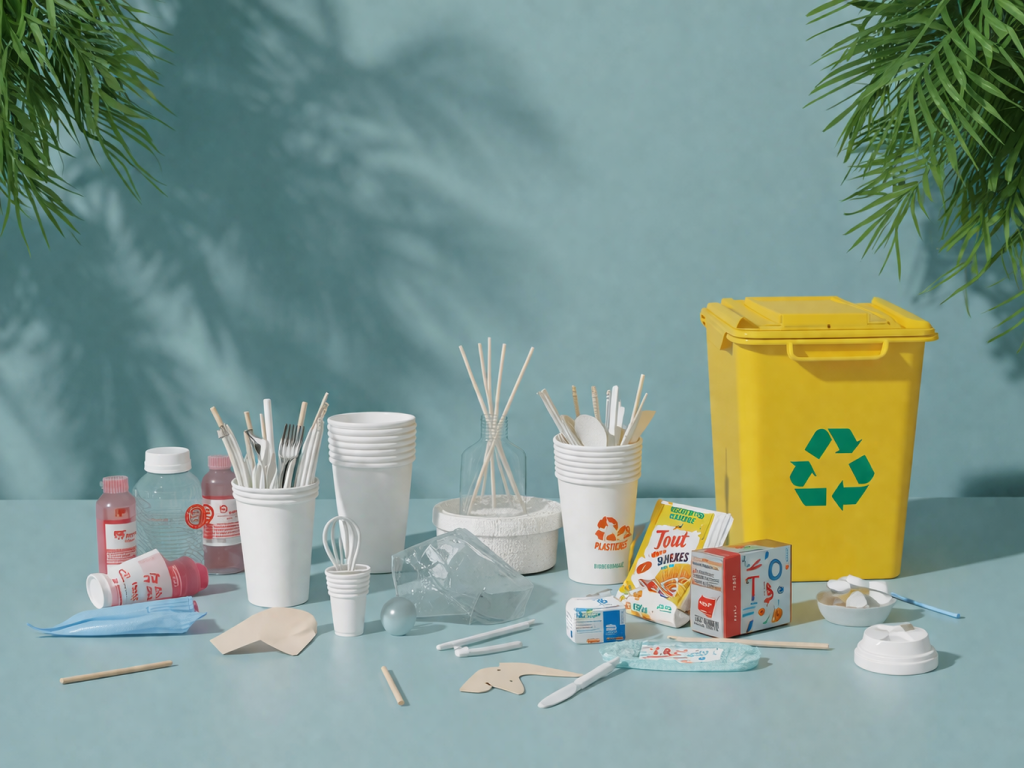
Plastic is everywhere. In every supermarket, at every coffee stand, in every bag. And that’s exactly the problem.
The extent: The figures
In 2022, each person in the EU generated an average of 36.1 kg of plastic packaging waste—an increase of about 8 kg compared to 2012. The total volume of plastic waste in the EU amounted to over 16 million tons.
In Germany, we generate about 41 kg of plastic packaging waste per person per year—one of the highest figures in Europe.
Particularly problematic: single-use plastic products—to-go cups, cigarette butts with plastic filters, plastic wrap—end up in the environment seconds after use. Cigarette butts, bottles, to-go cups, and disposable food containers end up far too often on roadsides, in parks, and in forests. To date, the cleanup costs have been borne by local governments and, consequently, the general public.
Why action is being taken now
In 2019, the EU responded with the Single-Use Plastics Directive, thereby introducing, for the first time, specific bans and manufacturer obligations for the most commonly found single-use items. Germany has consistently transposed this framework into national law through the EWKFondsG – in effect since January 2024.
Manufacturers and importers of certain single-use products – takeout containers, beverage cups, plastic wrap, and plastic shopping bags—pay annually into a national fund. Revenues are estimated at up to 450 million euros annually – money that flows directly back to cities and municipalities (street cleaning, waste collection, and public awareness campaigns).
What this is intended to achieve
The goal is not just cleanliness. It is a structural system change:
- Those who put products on the market pay. Not the municipalities or taxpayers.
- Incentives for design: Since the fee is calculated per kilogram of plastic, manufacturers have a direct financial interest in reducing material use or switching to plastic-free alternatives.
- Market viability of reusable solutions: The additional costs for single-use items make reusable systems (such as pool systems for bowls/cups) more economically attractive.
- To reduce per capita packaging waste by 5% by 2030, 10% by 2035, and 15% by 2040 compared to 2018.
Which products are affected?
- Food containers for immediate consumption (to-go).
- Bag and film packaging.
- Drink cups and containers (up to 3 liters).
- Lightweight plastic shopping bags.
- Wet wipes, balloons, and tobacco filters
What's new in 2026?
- Starting January 1, 2026, fireworks containing plastic components will also be subject to the fee—with a registration requirement in effect until December 31, 2026.
- The UBA (Federal Environment Agency) has introduced a 500-gram threshold: food containers and film packaging weighing more than 500 g are no longer subject to the law – a more practical distinction for companies.
- Next reporting deadline: May 15, 2026 – volume reporting for 2025 via the DIVID platform
- A new requirement is the stricter audit obligation by an expert (auditor, etc.) for quantities of 100 kg or more (previously, more lenient transitional rules applied in some cases).
- The EU Packaging Regulation (PPWR) will become binding in August 2026 and further tightens requirements at the European level.
What does this mean for businesses?
- Check registration on DIVID
- Prepare quantity documentation for 2025
- Book an auditor (for quantities of 100 kg or more of plastic)
- Portfolio check (verify whether any products exceed the 500-gram threshold)
- Prepare for PPWR (August 2026)
Contact us for comprehensive advice on your compliance issues relating to electrical and electronic equipment, packaging, batteries, and PV panels.
www.ecopv-eu.com/en/contact/ |
E-Mail: info@ecopv-eu.com
Supported over 20,000 customers with EPR compliance
Rated 5.0 on Google
Contact
We look forward to your message!