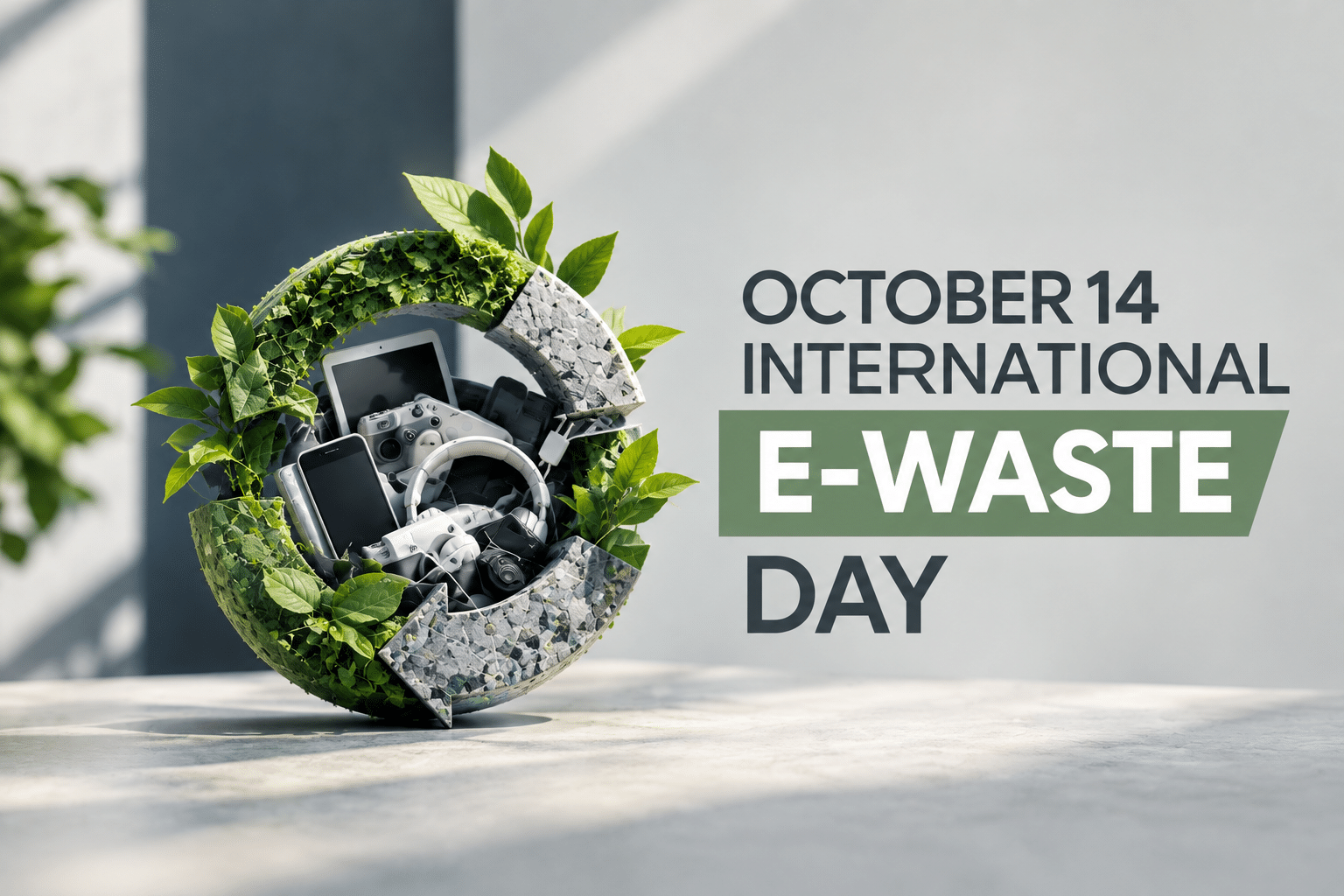
Today is International E-Waste Day. It was launched 9 years ago by the WEEE Forum, an alliance of about 50 industry organizations that put producer responsibility for end-of-life electronic equipment into practice. As such, the day is aimed not only at consumers, but explicitly at manufacturers and retailers as well.
This year’s theme: “Fast Tech”
Low prices and constant availability encourage impulse purchases of short-lived gadgets.
The consequences of this consumer behavior are alarming:
About two in five Europeans (39%) throw away such products after just four weeks at most—often after using them only once or even disposing of them still in their original packaging. Furthermore, the data shows that more than a quarter (27%) of these discarded small devices end up incorrectly in the gray trash bin instead of at the recycling center.
The rule of thumb is simple: Anything with a plug, battery, or rechargeable battery is e-waste, no matter how small. This applies to headphones and toys with light-up features as well as to disposable e-cigarettes.
Why Improper Disposal Is Costly
• Valuable raw materials are lost and cannot be reused.
• Hazardous substances can be released into the environment.
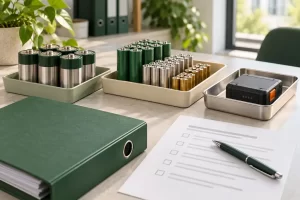
• Lithium batteries are among the most common causes of fires in garbage trucks and waste management facilities.
There are plenty of options for disposal:
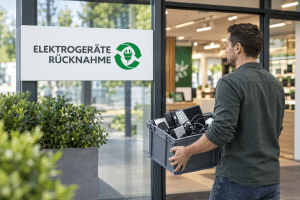
recycling centers, municipal collection points, and retailers. There have been some recent changes regarding retailers:
• As of July 1, 2026, retailers are required to accept returns of single-use e-cigarettes and tobacco heaters (ElektroG4).
• As of January 1, 2026, new fines apply for refusing to take back used devices. According to the trade press, fines of 10,000 euros or more per violation may be imposed.
Action Required for Businesses
The fact that Germany is once again falling significantly short of the EU’s statutory collection rate of 65% is increasing political pressure.
The German Environmental Aid Association (DUH) is already calling for even stricter, comprehensive producer responsibility.
Anyone who commercially markets electrical appliances, batteries, or packaging must ensure their compliance processes are in place to prevent sales bans or cease-and-desist letters. (Note: For foreign packaging manufacturers, the stricter authorized representative requirement has also been in effect since August 12, 2026).
For consumers: Do not dispose of end-of-life appliances and rechargeable batteries in the general waste bin; instead, take them to a collection point. For batteries and rechargeable batteries, it’s a good idea to tape over the contacts.
Contact us for comprehensive compliance consulting on electrical equipment, batteries, packaging, and PV panels – and subscribe to our newsletter to stay up to date on laws and trends.
 www.ecopv-eu.com/en/contact/ |
  E-Mail: info@ecopv-eu.com
 Supported over 20,000 customers with EPR compliance
Rated 5.0 on Google
Contact
We look forward to your message!