The German Battery Act (BattG) applies to anyone placing batteries on the German market, covering manufacturers, importers, distributors, and retailers. Its purpose is to ensure environmental responsibility, proper waste handling, and transparent traceability throughout the supply chain. Understanding which roles fall within scope is essential to avoid legal penalties, blocked listings, and platform restrictions.
Market Participants Defined
Manufacturer:
A manufacturer is any entity producing batteries or having them produced and selling them under its own brand. They must register with the national battery registry, provide product information, and finance recycling.
Importer:
Importers bring batteries into Germany from non-EU countries. They assume manufacturer-level obligations, including registration, reporting, and take-back responsibility.
Distributor:
Distributors make batteries available on the market, including wholesalers and online sellers. They must verify supplier registration and ensure proper labeling.
Product Categories Covered
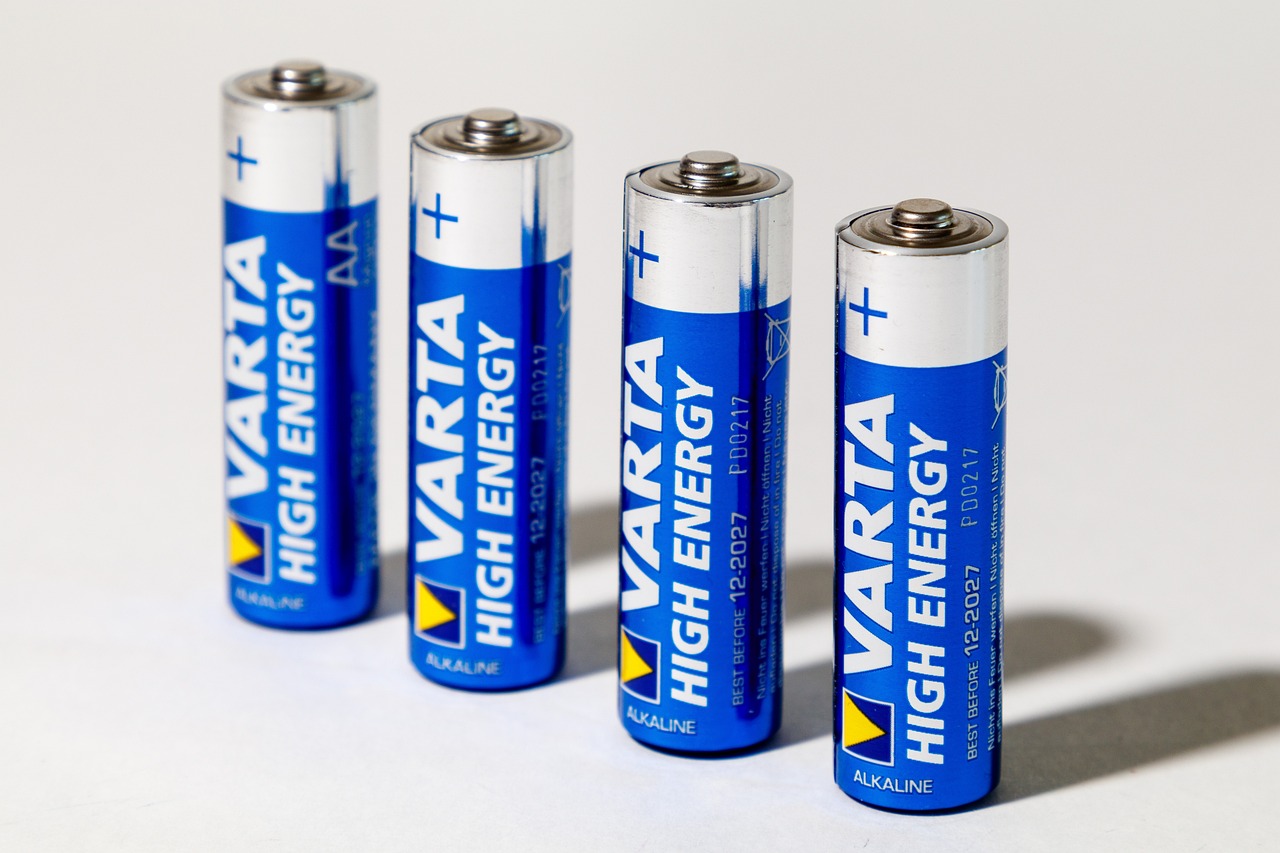
Portable Battery (Gerätebatterie)
An encapsulated battery weighing 5 kg or less, and not specifically designed for industrial use, and which is not an electric vehicle battery, an LMT battery, or a starter battery.
Electric Vehicle Battery (Elektrofahrzeugbatterie)
A battery specifically designed to deliver electrical energy for the traction of hybrid or electric vehicles of class L weighing more than 25 kg, or a battery specifically designed to deliver electrical energy for the traction of hybrid or electric vehicles of classes M, N, or O.
Light Means of Transport (LMT) Battery (Batterie für leichte Verkehrsmittel)
An encapsulated battery weighing 25 kg or less, specifically designed to deliver electrical energy for the traction of wheeled vehicles that can be powered exclusively by an electric motor or by a combination of motor and human power, including type-approved vehicles of class L.
Starter Battery (Starterbatterie)
A battery specifically designed to deliver electrical energy for starting, lighting, or ignition purposes,
and which may also be used for auxiliary or backup purposes in vehicles, other means of transport, or machinery.
Industrial Battery (Industriebatterie)
A battery specifically designed for industrial use, or after preparation for reuse or repurposing, is intended for industrial use, or any other battery weighing more than 5 kg, and which is neither an LMT battery, an electric vehicle battery, nor a starter battery.
Business Models in Scope
Dropshipping
Even without physical inventory, sellers can be responsible if shipping to German consumers.
Cross-border e-commerce
Foreign sellers must register before selling to German buyers; platforms may block non-compliant listings.
Obligations by Participant Type
Retailer responsibilities
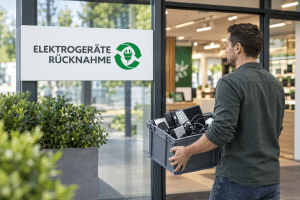
Retailers must accept returned used batteries free of charge and display required consumer information. They must only source from registered manufacturers.
Edge Cases
Private labels
Rebranding products instantly makes the seller the “manufacturer” under BattG.
Accessories vs consumables
Battery-powered accessories containing embedded cells are still in scope.
FAQ
Do rechargeable batteries follow BattG?
Yes.
Can platforms verify compliance?
Increasingly, yes.
Compliance Consultation CTA
If you sell battery products in Germany—directly or through platforms—expert guidance helps you avoid fines and listing removals. Contact our compliance team to ensure seamless, cost-efficient BattG fulfillment.