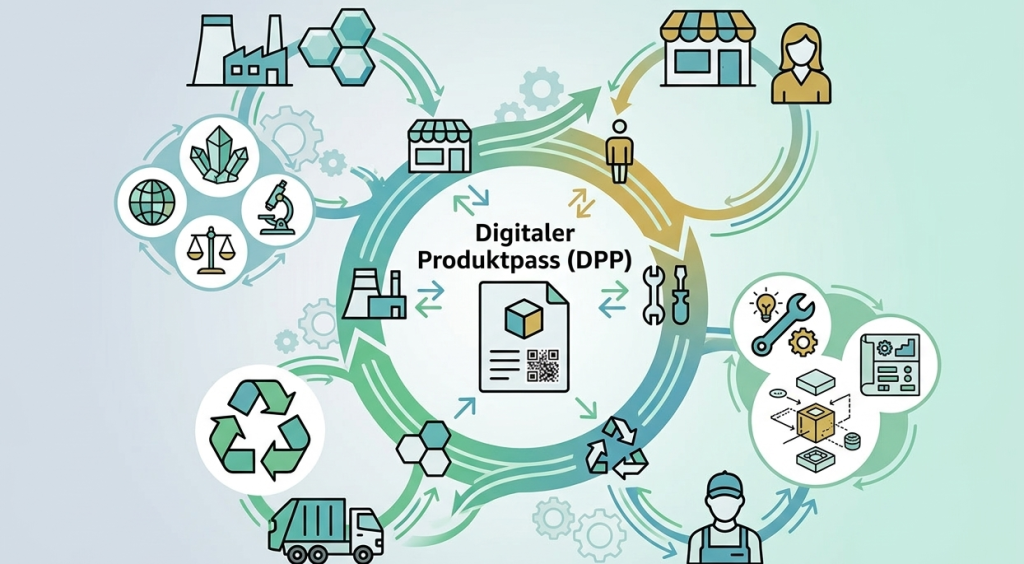
The Digital Product Passport (DPP): The most important facts at a glance

Imagine scanning a QR code on your new washing machine and immediately finding out: Where did the steel used in its manufacture come from? How can the drum be repaired? And what were the actual CO₂ emissions during production?

From 2027, products without this digital memory will no longer be allowed on the EU market. Without the Digital Product Passport (DPP), it will no longer be permitted to supply goods on the EU internal market.

1. What is the DPP and how do I use it?

The DPP is a digital data collection system. It links the physical product with information that is important for manufacturers, customers, and recyclers. Access is easy via a QR code, NFC chip, or RFID tag — attached directly to the product or packaging and easily readable by smartphone.

In doing so, it provides valuable insights into:

  • Materials: What raw materials are used in the product? (Important for recycling)
  • Origin: Where and how was it produced?
  • Repair: Are there instructions and spare parts available?
  • Environment: How high is the CO₂ footprint really?
  • Real-time data: Documents software updates and records maintenance and repairs in real time

2. Who has to deliver when?

The introduction will take place gradually, sector by sector:

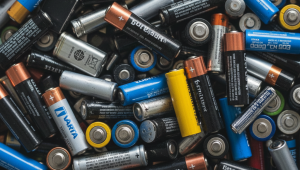
  • Starting with the battery passport! The digital battery passport is the pioneer and the first concrete implementation of the Digital Product Passport (DPP) in the EU. From February 2027, batteries must provide information on their origin, materials, and recyclability via a QR code. The battery passport is mandatory for: electric car batteries, industrial batteries > 2 kWh, and batteries for light vehicles (e-bikes, etc.).
  • For textiles (clothing and shoes), the delegated act is also expected in 2027; the actual obligation often only comes into force 18 months after these specific rules are adopted (i.e., more likely in 2028/2029).
  • Electronics (smartphones, laptops) will also follow in this time frame, but are often mentioned in parallel with textiles as a “priority product group.”
  • By 2030 – The broad market: The EU has a work plan for 2025–2030 that prioritizes iron, steel, aluminum, furniture, tires, detergents, and chemicals. Suppliers in these sectors must be “data-ready” by then.


3. Why is this important for companies?

  • Legal certainty: Those who provide the data secure market access in Europe.
  • Transparent supply chain: Companies know exactly where their raw materials come from. This also helps them comply with other laws (e.g., supply chain law).
  • No greenwashing: Sustainability can be proven with real data. This creates trust among customers.
  • Circular economy: Products can be repaired more easily and recycled better at the end of their life. This saves costs and conserves resources.


Practical examples: How the DPP is changing everyday life

  • Example: fashion. An outdoor jacket contains a chip or QR code. The customer can see that it has been produced fairly. The second-hand buyer can check its authenticity. The textile recycler can immediately identify it as “100% polyester, no mixed fibers.”
  • Example: mechanical engineering. A pump in an industrial plant reports its status. The DPP stores every maintenance record. If it needs to be replaced, the manufacturer knows exactly which components can be reconditioned and resold as “refurbished.”


Conclusion

The digital product passport is coming soon. Companies need to start preparing their data structures and supply chains now. Those who set the course today will have a clear competitive advantage in 2027.


Contact us for comprehensive advice on your compliance issues relating to electrical and electronic equipment, packaging, batteries, and PV panels.


📩www.ecopv-eu.com/en/contact/ | 📧 E-Mail: info@ecopv-eu.com 

⭐ Supported over 20,000 customers with EPR compliance

⭐ Rated 5.0 on Google


Contact

We look forward to your message!

info@ecopv-eu.com

+49 6196 5835357

Frankfurter Str. 70-72
65760 Eschborn

Leave a Reply

Your email address will not be published. Required fields are marked *