The photovoltaic industry is facing a profound regulatory shift. To achieve the climate goals of the European Green Deal and establish a true circular economy, the EU is drastically tightening its requirements for hardware. Energy efficiency alone is no longer enough.
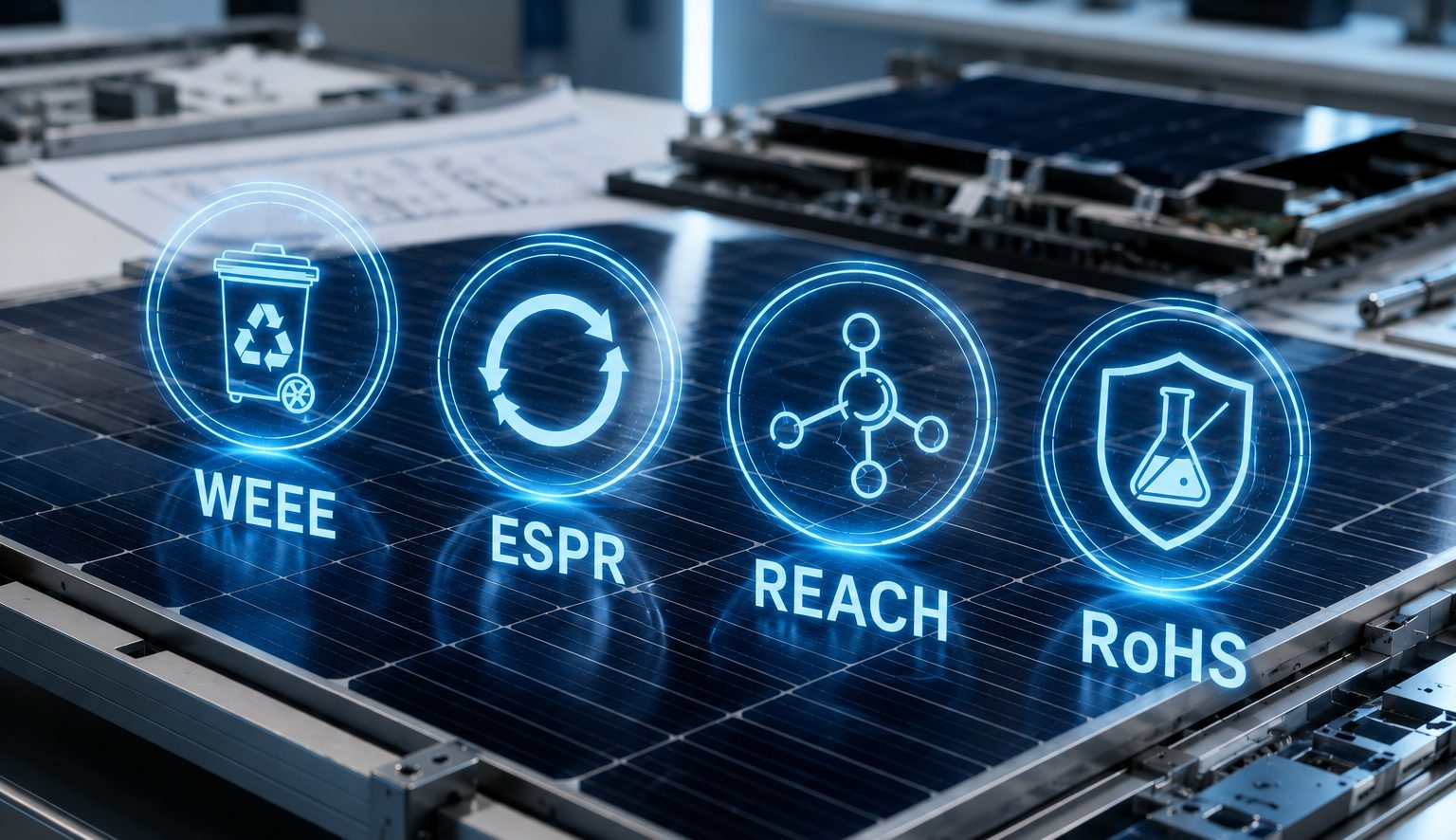
The new EU Ecodesign Regulation (ESPR)
The regulation, which came into effect in July 2024, requires manufacturers to design products to be more sustainable from the ground up. The focus is on the principle of “design for durability and recyclability”:
- Repairability & Maintenance: Manufacturers must provide detailed disassembly information. Components such as bypass diodes or the junction box must be replaceable without destroying the module.
- Transparent Carbon Footprint: Through harmonized life cycle assessments (LCA), the ecological footprint is calculated seamlessly and comparably across the entire supply chain.
- Digital Product Passport (DPP): All material data, ingredients, and recycling instructions will be stored digitally in the future. The phased introduction for electronics and PV components is planned as part of the EU work plan.
REACH & RoHS
The European Union is continuously tightening regulations regarding transparency and the handling of hazardous substances in solar technology. Manufacturers, importers, and distributors of photovoltaic systems are subject to strict legal requirements:
- RoHS (Restriction of Hazardous Substances): Historically, permanently installed PV modules were largely exempt from the scope of RoHS. Although the EU is gradually tightening exemptions for hazardous substances such as lead, specific special regulations continue to apply to the PV industry (e.g., for soldered connections) for technical reasons. Nevertheless, market pressure is mounting on manufacturers to provide complete documentation and to increasingly switch to lead-free alternatives.
- REACH & SVHC Reporting Requirement: If a PV module contains “substances of very high concern” (SVHC) above the 0.1 percent threshold, reporting to the European SCIP database is mandatory. This transparency ensures that installation companies are protected and forms the foundation for safe, circular recycling at the end of the product’s life cycle.
WEEE Directive: Extended Producer Responsibility for End-of-Life Modules
Manufacturers and importers of PV modules in the EU bear financial and legal responsibility for the entire life cycle of their products. The WEEE Directive requires the comprehensive take-back and recycling of all end-of-life equipment.
ECOPV-EU supports companies in meeting these PV compliance obligations. We handle everything from EAR registration and insolvency-proof guarantees to all communication with authorities and the entire reporting process.
Contact us!
 www.ecopv-eu.com/en/contact/ |
  E-Mail: info@ecopv-eu.com
 Supported over 20,000 customers with EPR compliance
Rated 5.0 on Google
Contact
We look forward to your message!