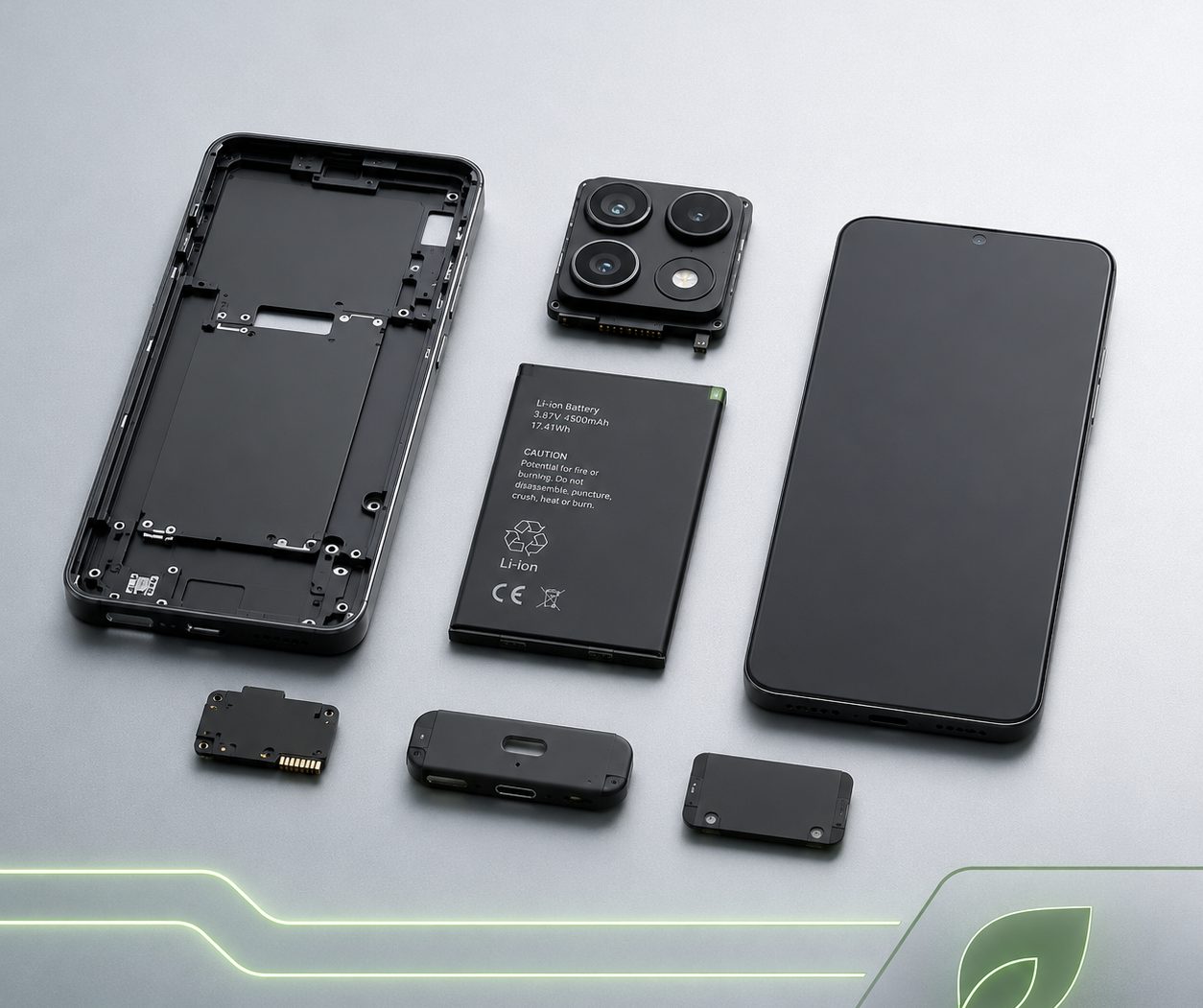
Today’s electronics industry is characterized by short innovation cycles and a problematic throwaway culture. A promising approach to reducing electronic waste is the concept of modularity.
Modularity means that a smartphone no longer consists of a single, permanently glued-together unit, but is instead built like a modular system. Users can detach and replace individual components – such as the camera or display – themselves in just a few simple steps. This will soon become the standard: Starting in 2027, a new EU law will require all manufacturers to ensure that end users can at least easily replace the battery themselves.
Why component replacement is important and makes sense
1) Economic benefits
- Lower repair costs: Replacing specific components (e.g., the battery or display) is significantly cheaper than buying a new device.
- Longer lifespan: Modular upgrades (e.g., a better camera module) keep the smartphone technically up-to-date for years.
- Higher resale value: Devices that are easy to repair retain a more stable value on the secondhand market.
2) Environmental Benefits
- Less electronic waste: The premature replacement of functioning electronic components is effectively prevented.
- Resource conservation: Demand for critical raw materials such as lithium, cobalt, and rare earth elements decreases significantly.
- CO₂ reduction: The majority of a smartphone’s greenhouse gas emissions occur during production; longer use drastically reduces the annual carbon footprint.
3. Legal Drivers & Right to Repair
- EU Repair Directive: Manufacturers are legally required to make repairs easier and more affordable.
- Long-term spare parts requirement: For smartphones, essential spare parts (such as batteries and displays) must be available for up to 7 years after the end of production.
- Transparent Pricing: Manufacturers are prohibited from artificially inflating the prices of replacement parts to make repairs unattractive.
- Ban on Software Locks: So-called “part pairing” – where third-party replacement parts are blocked via software – is strictly restricted by law.
Technical Challenges & Conclusion
Despite environmental and regulatory advantages, the modular concept falls short of modern design standards. Compared to premium devices with tightly bonded components, modular smartphones require connectors and frames. This makes them thicker, heavier, and more susceptible to wear and tear, and significantly complicates protection against water and dust. So far, these technical compromises have prevented them from succeeding in the mass market.
The future of modular smartphones depends on whether manufacturers can strike a balance between rugged durability and aesthetics.
Questions about your EPR compliance? Contact us!
 www.ecopv-eu.com/en/contact/ |
  E-Mail: info@ecopv-eu.com
 Supported over 20,000 customers with EPR compliance
Rated 5.0 on Google
Contact
We look forward to your message!