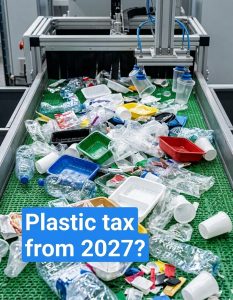
Multi-layer composite films that cannot be separated. Labels that contaminate plastic. Black packaging that sorting systems cannot detect. All of these are design choices with consequences that only become apparent at the end of the supply chain.
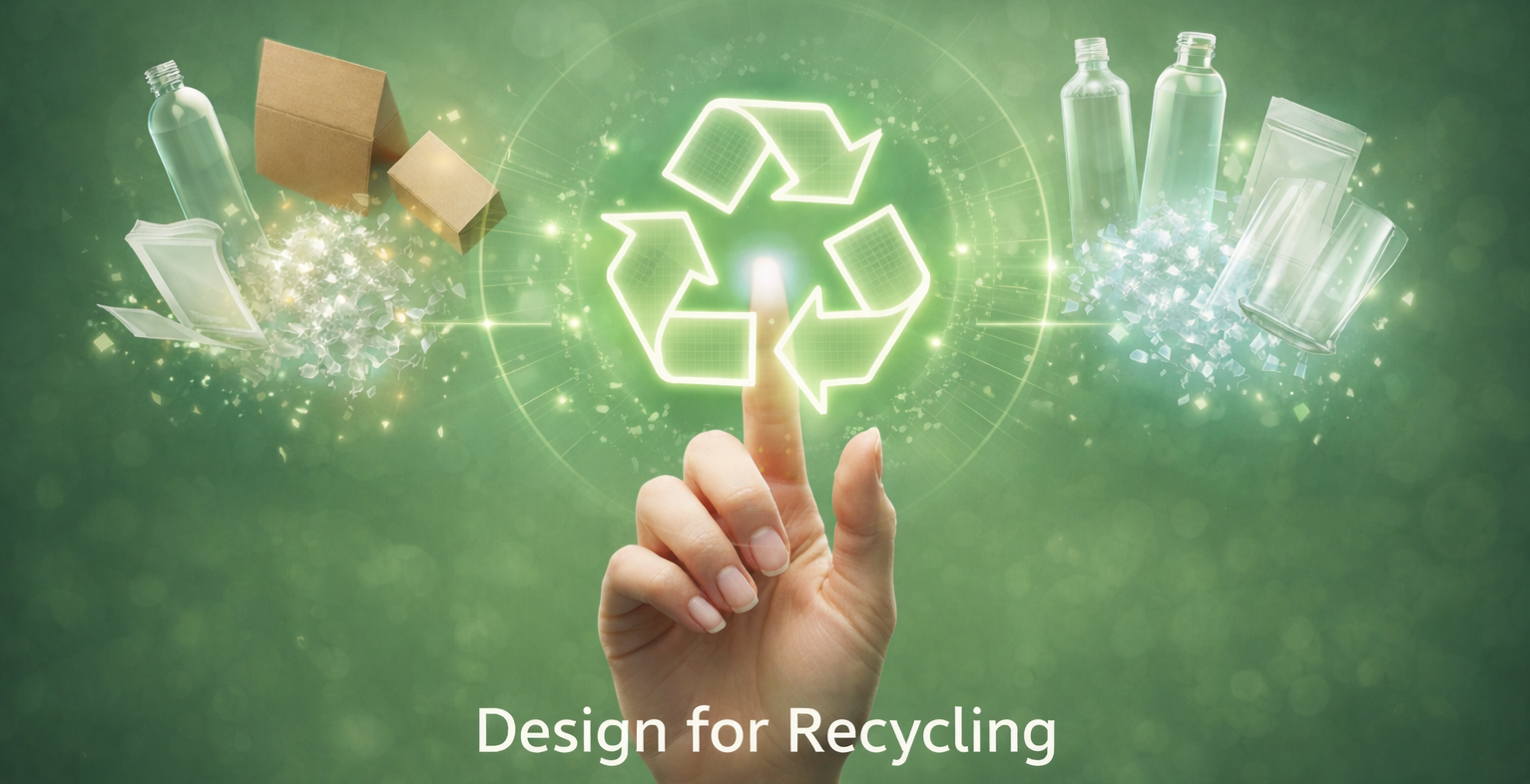
This is exactly where Design for Recycling comes in!
Not a new concept
The term has been around since the late 1970s. It was coined by Prof. Dr. Walter Jorden: even before a product is manufactured, consideration should be given to its future recycling. For decades, this remained a niche concept.
What this means in concrete terms
- Manufacturers must use single-material packaging instead of composites, choose materials that can be sorted using near-infrared (NIR) technology, and avoid adhesives and dyes that render recycled materials unusable.
- Retailers share responsibility: Non-compliant packaging must not be sold. This makes the issue business-critical for procurement (risk management).
- Consumers are sending a message through their purchasing decisions – and starting in 2028, the EU will make waste separation easier by introducing uniform pictograms on packaging and bins across the Union.
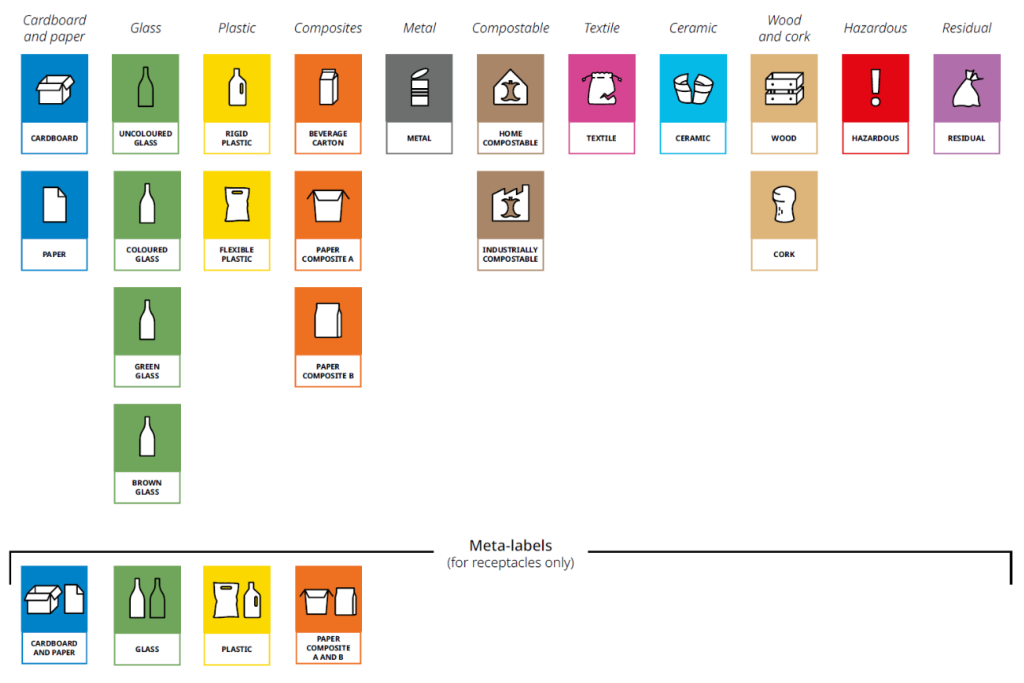
Design of the new pictograms
The PPWR makes it mandatory
Starting in August 2026, the EU Packaging Regulation (PPWR) will apply directly in all member states.
- Declarations of conformity: Starting August 12, 2026, written declarations will be required for all packaging.
- Recycling: Starting in 2030, all packaging must be recyclable (Levels A–C).
- EU recycling targets: After reaching 65% by 2025, the EU’s next major target is a recycling rate of 70% by 2030.
- E-commerce: Empty space in shipping packaging may not exceed 50% in the future.
- Hazardous Substances: Starting August 12, 2026, packaging that comes into contact with food may contain certain PFAS (forever chemicals) only in limited quantities.
What this means in practice
Many companies underestimate the effort involved. Technical documentation, declarations of conformity, supplier certificates, and information on the availability of recycled materials – all of this takes time and advance planning.
A pragmatic five-step approach:
- Assess the current situation: What materials are in use? What is the current proportion of recycled content?
- Check recyclability: Is the packaging NIR-sortable? Are there any contaminants in the design?
- Secure the supply chain: Clarify recycled material grades and availability with purchasing and suppliers early on.
- Establish documentation: Create technical documentation, declarations of conformity, and audit trails.
- Adapt step by step: Not everything has to be perfect right away. What’s important is a clear plan to meet all requirements by 2030.
Contact us for comprehensive advice on your compliance issues relating to electrical and electronic equipment, packaging, batteries, and PV panels.
 www.ecopv-eu.com/en/contact/ |
  E-Mail: info@ecopv-eu.com
 Supported over 20,000 customers with EPR compliance
Rated 5.0 on Google
Contact
We look forward to your message!