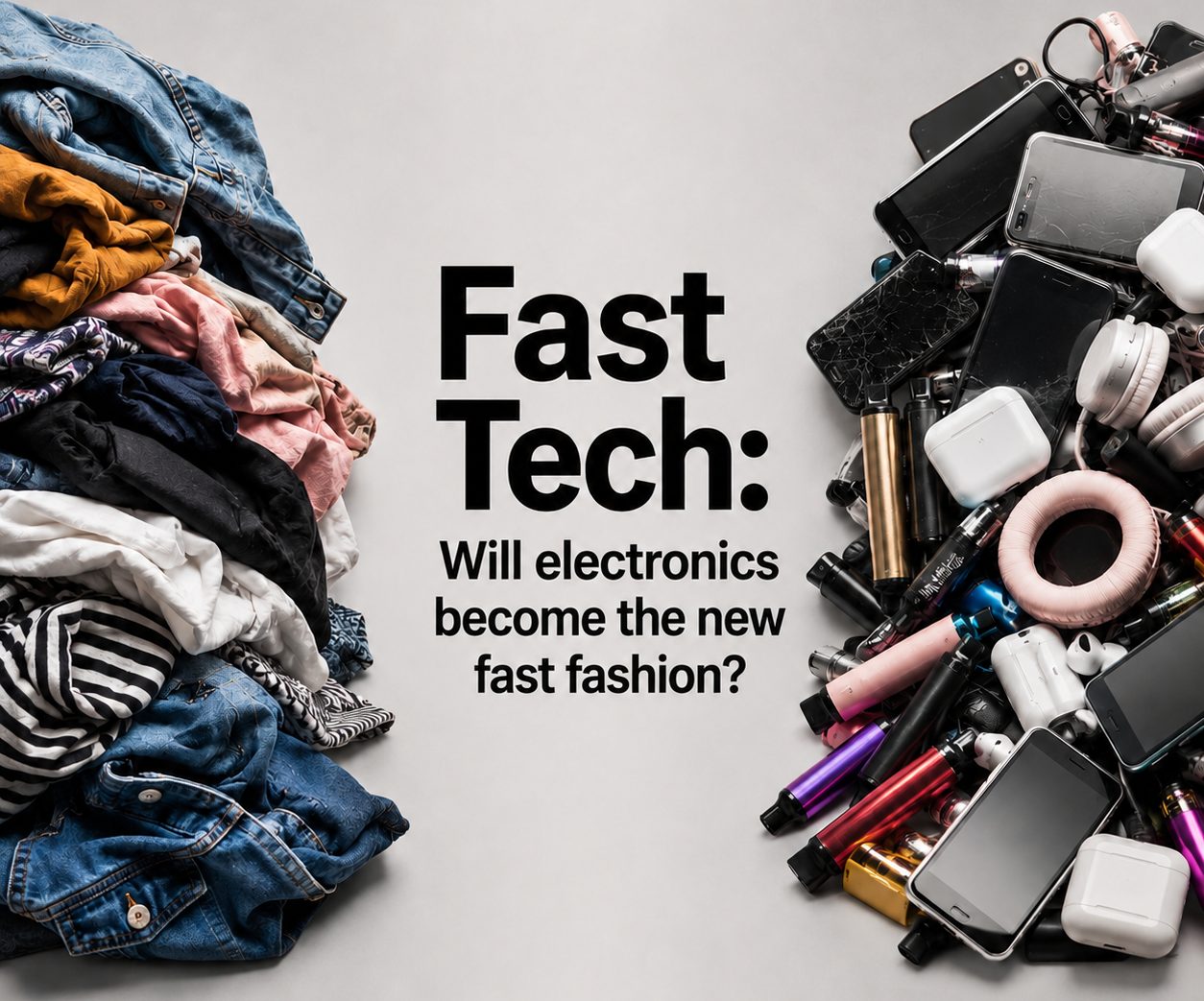
The principle of fast fashion – rapid production, low prices, short lifespan – is increasingly taking hold in the electronics industry.
What is fast tech?
It refers to electronics products with short lifecycles.
While televisions, stereos, and household appliances used to be considered long-lasting investments, this type of short-lived consumption is becoming increasingly significant and prevalent. This trend is driven by low-cost marketplaces and falling production costs.
Smartphones are replaced regularly. Small electronic products are becoming increasingly affordable. And with disposable products, a new form of electronics is emerging that is intended from the outset for only short-term use.
Typical drivers and examples:
- Disposable e-cigarettes: Once the battery is drained, they become electronic waste despite containing valuable lithium-ion batteries.
- Cheap headphones & gadgets: Extremely inexpensive no-name products that end up in the trash immediately when they break.
- Planned obsolescence: Permanently installed batteries and glued-shut casings make repairs impossible.
- Performance losses: New, resource-intensive software updates slow down older devices so much that users feel forced to buy new ones.
The symbol of waste: Disposable vapes
According to Deutsche Umwelthilfe (DUH), over 60 million disposable vapes end up in the trash in Germany every year. That amounts to over 2,000 metric tons of electronic waste. Each device contains valuable electronics and sensitive lithium-ion batteries – yet it’s thrown away after just a few hundred puffs and often causes dangerous fires if disposed of improperly.
A global waste crisis
The Global E-waste Monitor reveals alarming trends:
- 62 million metric tons of e-waste were generated as early as 2022.
- 82 million metric tons per year are projected by 2030.
According to the UN, the mountain of e-waste is growing five times faster than documented recycling rates.
Without a shift in mindset, the global mountain of e-waste will continue to grow unstoppably. “Fast tech” threatens to become just as massive a sustainability problem as “fast fashion.”
The difference: Every electronic device also contains valuable, finite raw materials and highly sensitive chemical components.
Policymakers are providing initial solutions:
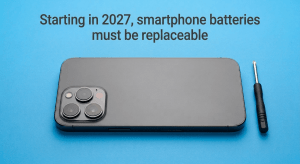
- Mandate for replaceable batteries: The new EU Battery Regulation will require manufacturers, starting in February 2027, to design batteries in smartphones and laptops so that consumers can replace them themselves.
- Right to repair: The right to repair, enacted in Germany, requires manufacturers to provide replacement parts for devices such as smartphones at fair prices for up to seven years.
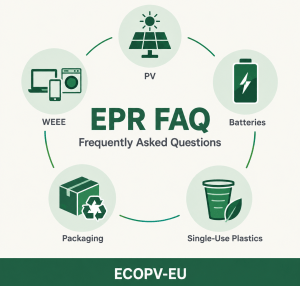
Contact us for comprehensive advice on your compliance issues related to electrical and electronic equipment, packaging, batteries, and PV panels.
 www.ecopv-eu.com/en/contact/ |
  E-Mail: info@ecopv-eu.com
 Supported over 20,000 customers with EPR compliance
Rated 5.0 on Google
Contact
We look forward to your message!