
The cells come from Asia, the packs are assembled in an EU member state, and the vehicle manufacturer installs the battery management system (BMS).
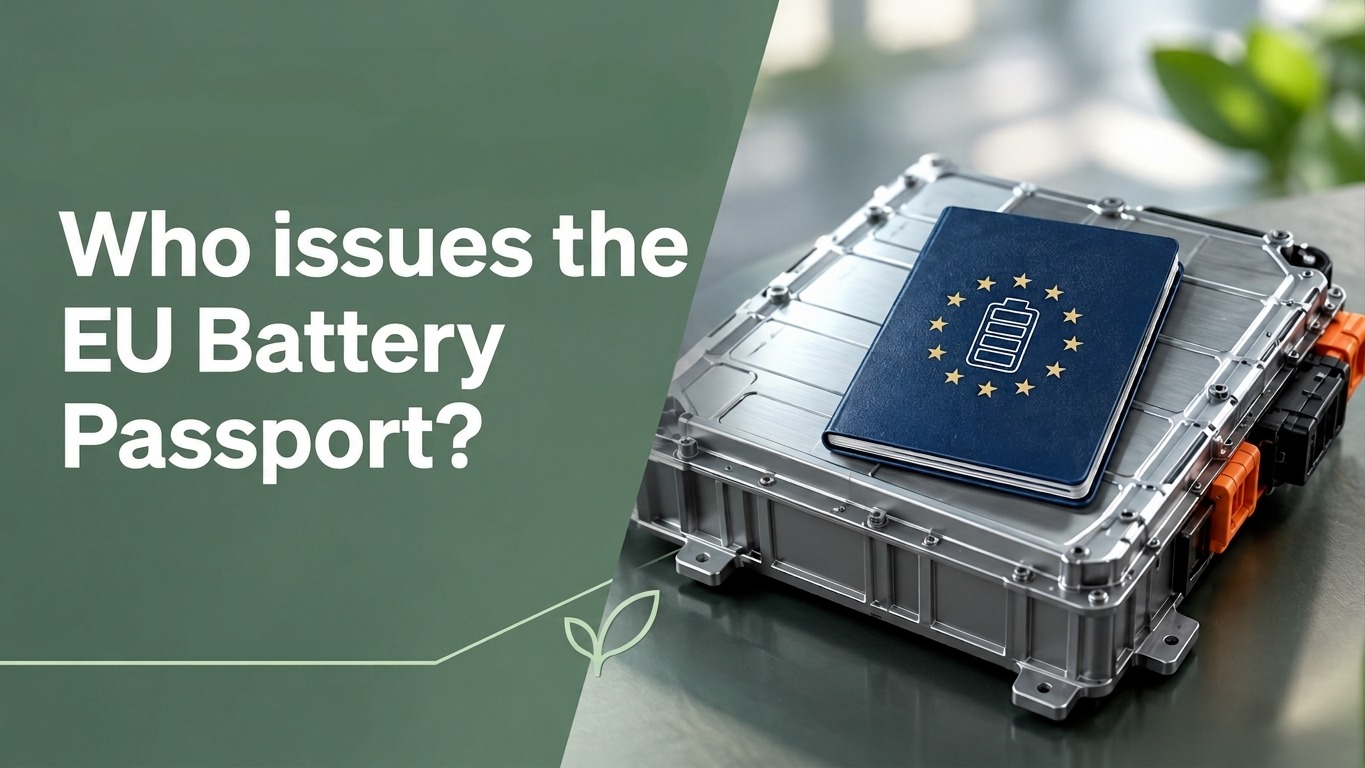
Who is responsible for the digital battery passport?
Just under four months before the official launch on February 18, 2027, the European Commission has clarified in writing the responsibilities involved in complex supply chains.
The rule here is: Responsibility lies with whoever completes the battery!
The decisive factor is the location where the battery is made operational. For traction and industrial batteries, this is generally where the BMS is integrated:
• Does the battery manufacturer supply a completely finished system? Then it issues the passport.
• Does the vehicle manufacturer install the BMS itself? Then responsibility for the passport shifts to the vehicle manufacturer.
• Import-ready products: If a vehicle or a battery pack—including the BMS—is imported directly into the EU from a third country, the obligation falls on the importer.
• Cells and modules generally do not yet require their own passport during transport.
Delegation, yes; shifting liability, no!
- Suppliers can be commissioned to create and maintain the passport through a written authorization. However, ultimate legal responsibility remains firmly with the entity placing the product on the market in the EU.
What applies starting on Day 1 (February 2027)?
• Dynamic data: Information on battery condition must be available as of the start date (updates occur when the status changes, not in real time).
• Registry identity: Verification in the EU DPP Registry is performed using an eIDAS-compliant electronic seal and is valid for a maximum of 3 years.
• Data grace period: The detailed carbon footprint, verified due diligence reports, and the exact recycled content do not yet have to be submitted by February 2027. The mandatory due diligence report does not take effect until August 2027.
The requirement to create a digital passport applies to three specific battery categories: electric vehicle (EV) batteries, batteries for light-duty vehicles (LMT) such as e-bikes or e-scooters, and industrial batteries with a capacity exceeding 2 kWh (e.g., stationary energy storage systems).
Our compliance tip:
The countdown is on. Analyze your manufacturing steps and interfaces on a product-by-product basis. Clarify data clauses with suppliers early on and complete the registry verification before February 18, 2027.
Contact us for comprehensive compliance consulting on electrical equipment, batteries, packaging, and PV panels – and subscribe to our newsletter to stay up to date on laws and trends.
 www.ecopv-eu.com/en/contact/ |
  E-Mail: info@ecopv-eu.com
 Supported over 20,000 customers with EPR compliance
Rated 5.0 on Google
Contact
We look forward to your message!