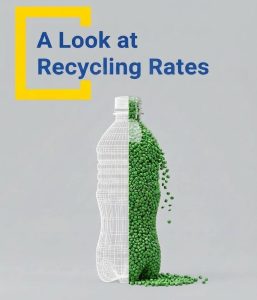
They’re everywhere in the supermarket: green labels and claims like “sustainable” or “fully recyclable.” But theory and practice often diverge. The key distinction lies between the theoretical promise of “recyclable” and the actual status of “recycled.”
What “recyclable” really means
The term simply means that an infrastructure for recycling exists. Whether the product actually ends up there depends on its sortability and market value.
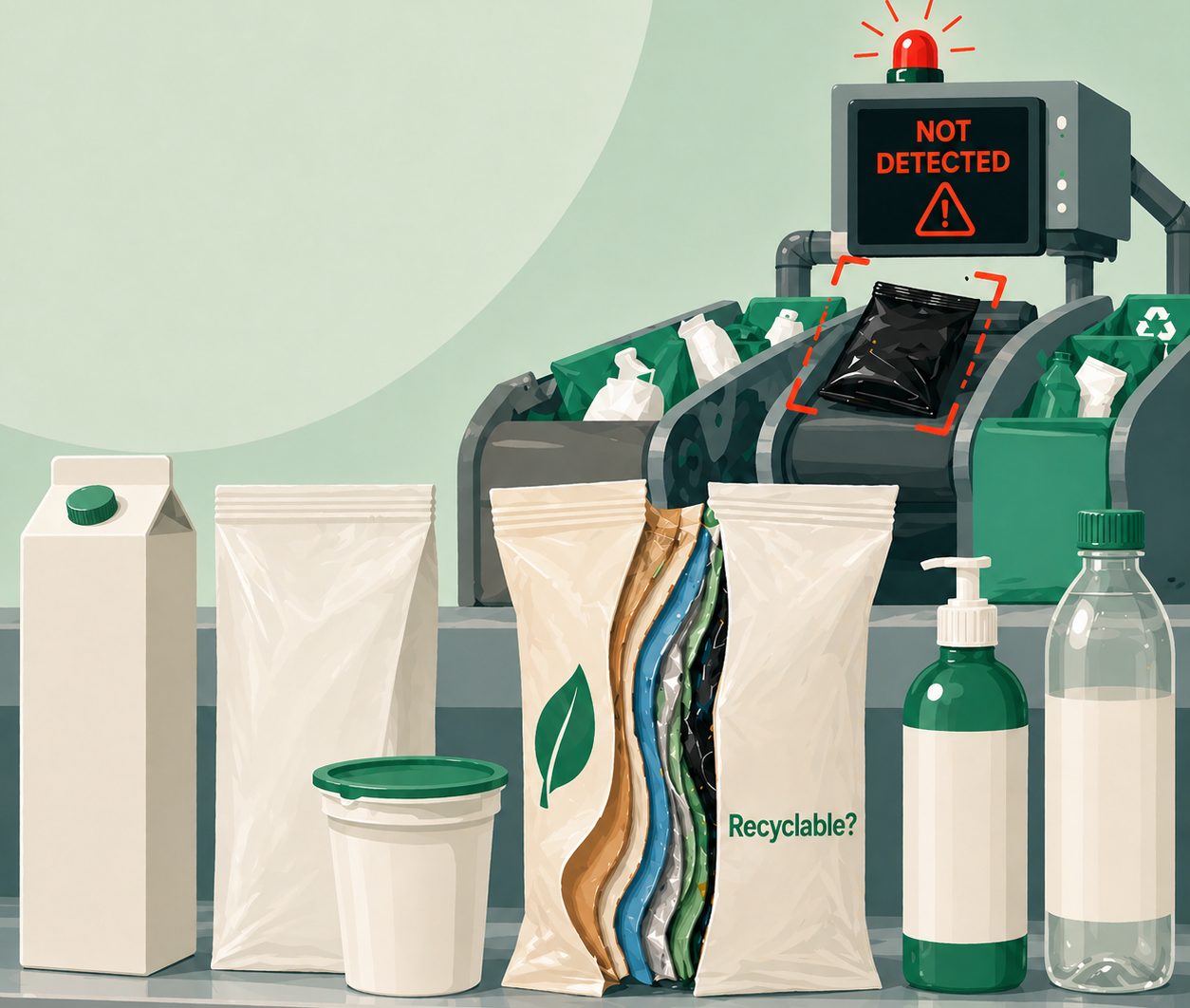
In reality, many multilayer packaging materials end up in incinerators despite the recycling symbol. While glass and metals circulate with almost no loss, plastics lose quality with every recycling cycle (downcycling).
The root of the problem
- Composite materials: Much packaging consists of “hybrids” made of paper, plastic, or aluminum. Since sorting facilities can barely separate these layers, incineration is often the only option.
- Black packaging: Traditional black plastics absorb the infrared rays emitted by sorting machines. The machine fails to recognize the material, which is why it ends up in the general waste.
- Downcycling instead of circularity: Plastic loses quality during recycling. This usually results in low-quality products rather than new packaging. On average, the latter consists of only 15% recycled material; the rest is virgin plastic made from petroleum.
- Price pressure: New plastic made from cheap petroleum is often cheaper than processed recycled material. Without legal quotas, many companies lack the economic incentive to recycle.
- No oversight: Until now, manufacturers have been able to advertise “100% recyclable” with almost no scrutiny. New EU laws will prohibit vague environmental claims without scientifically verified data.
EU sets clear rules
Starting in September 2026, the EU’s “EmpCo” directive will make greenwashing more difficult and put an end to vague promises:
- Proof requirement: Terms such as “sustainable” or “recyclable” will require substantiated, publicly available evidence in the future.
- Label check: Proprietary “eco-logos” without independent certification are not permitted.
- No more offsetting: Advertising claiming “climate neutrality” based solely on CO₂ certificates rather than actual reductions is prohibited.
- Strict penalties: Violations may result in fines of up to 4% of annual turnover.
What consumers can do
Those who want to shop consciously should focus on facts rather than appearances. What matters is the actual composition of the packaging, not its green design.
Pay attention to the recycled content rather than vague promises. Statements such as “made from 80% recycled plastic” are more environmentally valuable than mere theoretical recyclability.
Also, prefer single-material packaging, as composite materials often prevent recycling. In this regard, trust independent certifications like the Blue Angel or the EU Ecolabel rather than manufacturers’ own logos.
Contact us for comprehensive advice on your compliance issues relating to electrical and electronic equipment, packaging, batteries, and PV panels.
 www.ecopv-eu.com/en/contact/ |
  E-Mail: info@ecopv-eu.com
 Supported over 20,000 customers with EPR compliance
Rated 5.0 on Google
Contact
We look forward to your message!