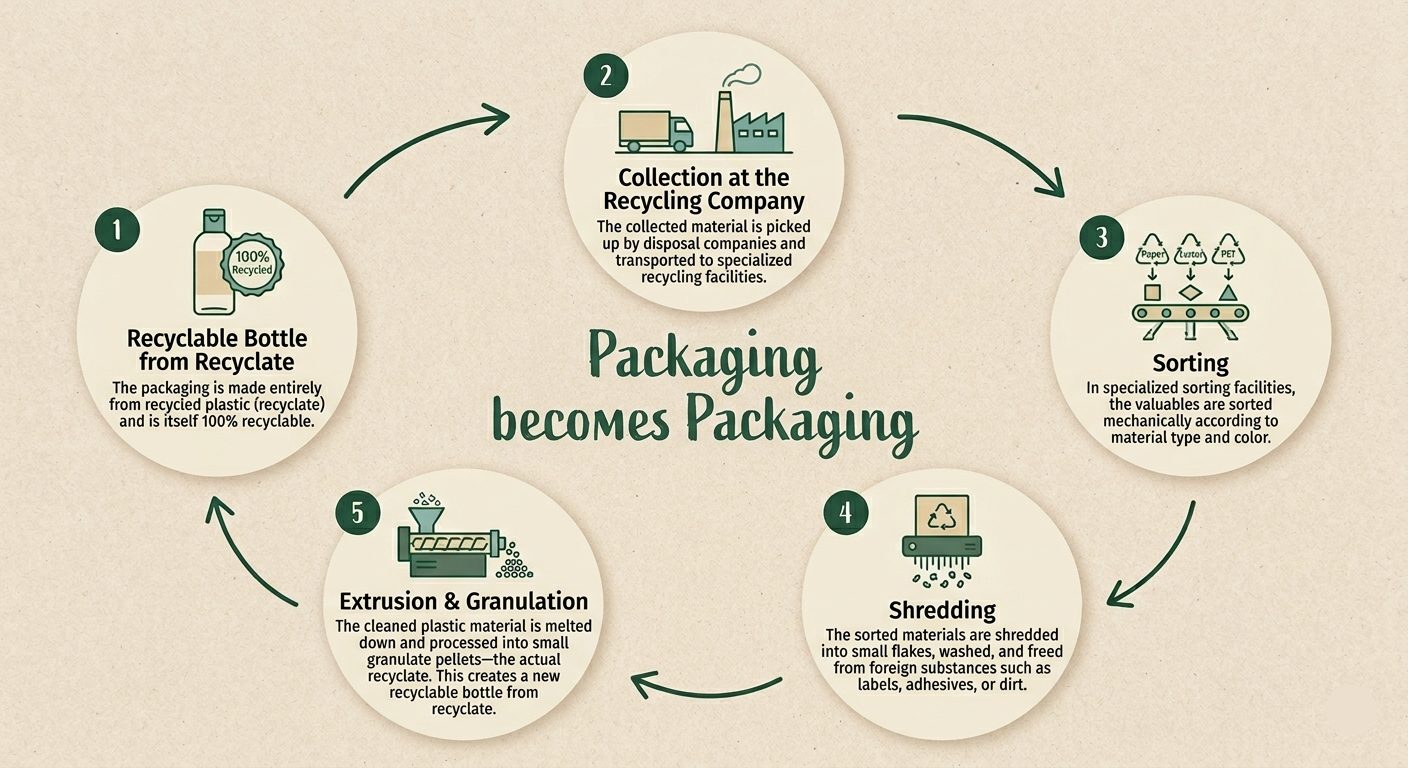
Recycled materials are more than just “recycled plastic.”
They are a key raw material for the circular economy and help us reuse existing materials instead of constantly producing new plastic from fossil fuels.
What does that mean in practice?
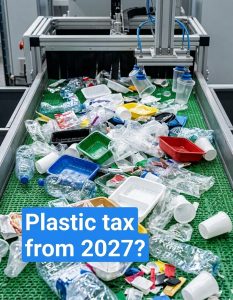
Recycled materials are produced from plastic waste that is collected, sorted, shredded, cleaned, and then processed into new granules. In this way, waste is transformed back into a valuable raw material for new products.
Post-consumer recycled materials vs. post-industrial recycled materials
Post-consumer recycled materials come from household waste, such as the yellow bag or yellow bin.
Post-industrial recycled materials are produced from industrial production residues.
The route to recycled material is clear:
- Collection of plastic waste.
- Sorting by material type.
- Shredding into flakes.
- Removal of contaminants.
- Extrusion and pelletization into recycled material.
A shift in perception
In the past, recycling was often viewed as “downcycling” (inferior quality); today, thanks to modern technology, recycled materials are increasingly seen as an equivalent substitute for virgin materials.
Why are recycled materials important?
The circular economy keeps raw materials in circulation for as long as possible. Recycled materials play a central role in conserving resources and preventing waste.
Approximately 400 million tons of plastic are produced worldwide each year, yet only 9.5 percent consists of recycled material. At the same time, plastic remains in the environment for an extremely long time.
The situation in Germany is also challenging: While the recycling rate for plastic packaging is over 70 percent, a large portion of it is incinerated. The rate for true material recycling, which produces new recycled materials, is only about 50 percent.
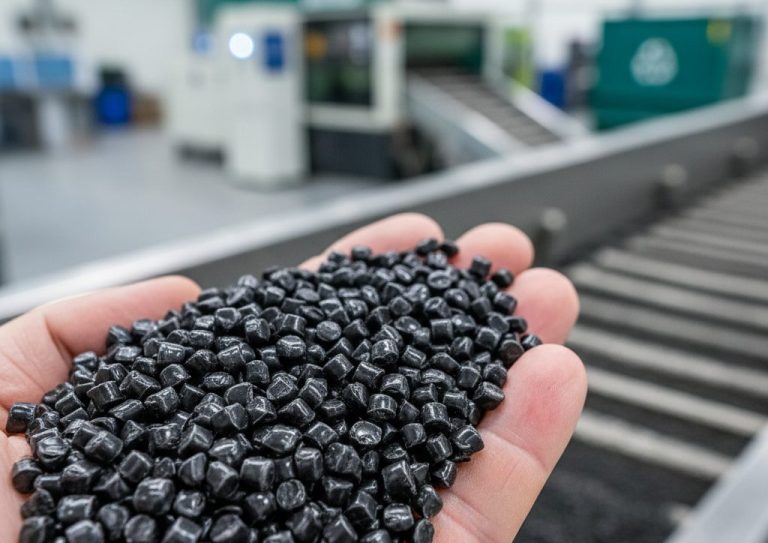
Recycled granules
Where are recycled materials used?
Recycled materials are already used in many areas today: for example, in water bottles, shampoo and shower gel packaging, detergent containers, films, cups, and other plastic packaging. PET, in particular, is already well established in the packaging sector.
In addition to packaging, recycled materials are used extensively in the construction industry (e.g., sewer pipes, window profiles), in horticulture (flower pots), and in logistics (transport pallets).
Conclusion
Recycled materials are the key to a circular economy: they lower CO2 emissions, reduce dependence on petroleum, and transform waste into valuable resources. However, high costs, technical hurdles in eliminating contaminants, and poor product design are still holding back widespread adoption. Only by overcoming these hurdles and consistently designing products with recycling in mind can we achieve the sustainable transformation of the industry.
Contact us for comprehensive advice on your compliance issues relating to electrical and electronic equipment, packaging, batteries, and PV panels.
 www.ecopv-eu.com/en/contact/ |
  E-Mail: info@ecopv-eu.com
 Supported over 20,000 customers with EPR compliance
Rated 5.0 on Google
Contact
We look forward to your message!