Did you know that a flashing greeting card is legally classified as an electrical device? The reason is the “open scope” principle: Since 2018, the Electrical Equipment Act (ElektroG) has covered almost all products that require electricity – including items like flashing sneakers or heated clothing.
What counts as a small electrical appliance?
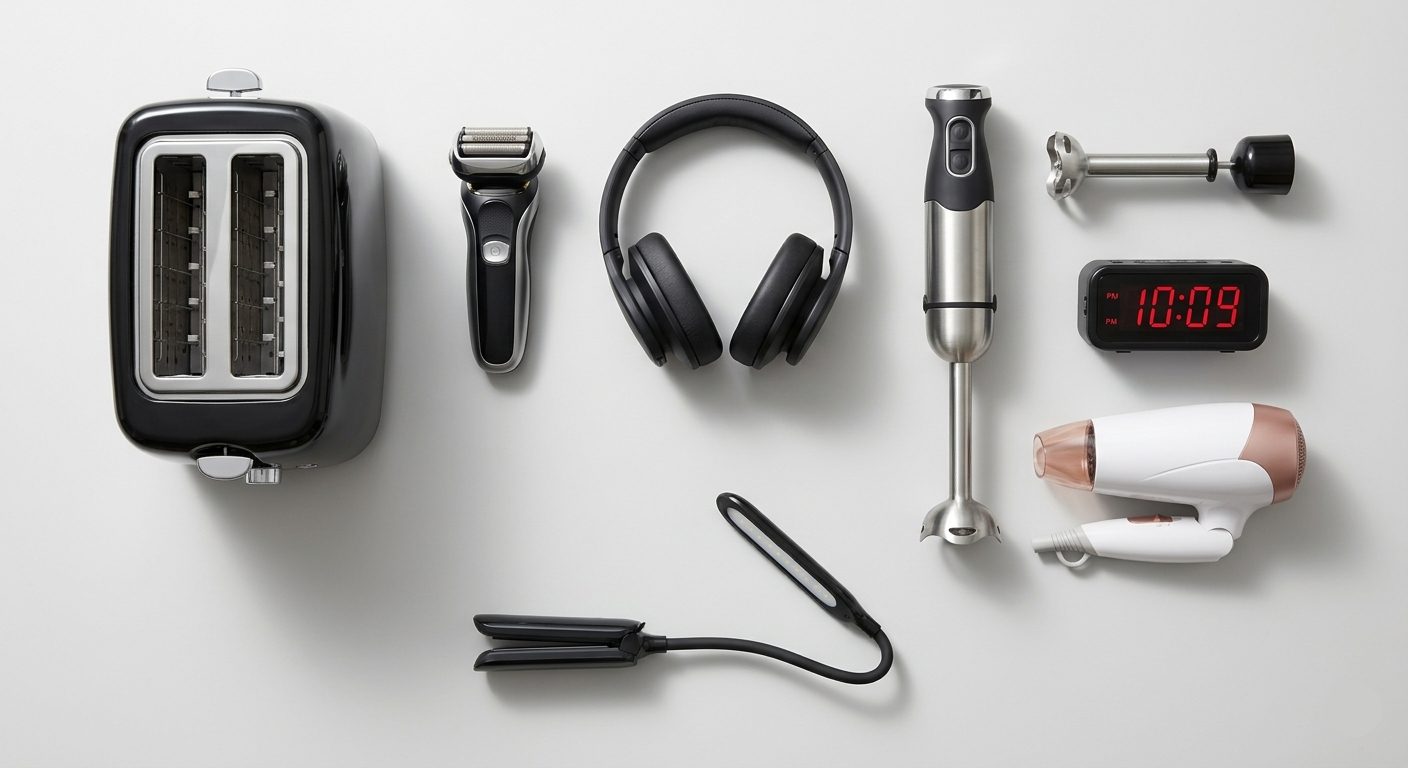
Classification is based on dimensions: if no side is longer than 50 cm, the product is considered a small appliance. This includes toasters, razors, battery-powered gadgets, smartphones, kettles, lamps, and small power tools – provided that the device in question requires electrical energy (mains power, batteries, or rechargeable batteries) for its primary function.
Obligations for manufacturers and importers
- Registration: Registration with the EAR Foundation is mandatory prior to sale.
- Guarantee: For B2C devices, proof of an insolvency-proof guarantee for disposal costs must be provided annually.
- Labeling: Devices must be permanently marked with the crossed-out trash can symbol and a manufacturer’s identification.
- Information: Consumers must be informed about environmentally sound disposal.
Obligations for Retailers
- Sale of Registered Appliances Only: Retailers may only offer appliances that have been properly registered.
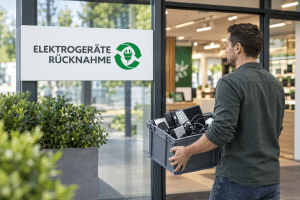
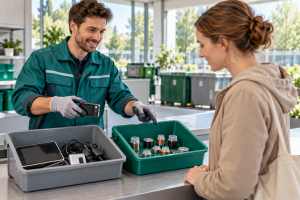
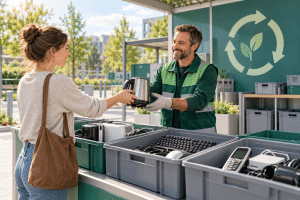
- Take-Back (Stationary retailers): Stores with more than 400 m² of retail space must accept small used appliances (up to 25 cm) free of charge – even without a new purchase.
- When a new large appliance is purchased, an old appliance of the same type must be taken back free of charge (1:1 take-back).
- Online retailers: Here, shipping and storage space counts (400 m² or more). Retailers must offer free return options within a reasonable distance, such as through postal returns or partnerships with parcel shops.
For consumers: Dispose of properly
Electrical appliances never belong in household trash. They contain valuable raw materials such as gold and copper. Additionally, batteries can cause fires during waste collection.
Disposal locations:
- Municipal recycling centers (free of charge).
- Retailers: Large electronics stores (400 m² or larger) and grocery stores (800 m² or larger, provided they sell electrical appliances) must accept old appliances free of charge.
- Large online retailers: Retailers with at least 400 m² of warehouse and shipping space must offer free returns
Conclusion
Proper disposal of electronic devices protects the environment, conserves valuable resources, and helps avoid unnecessary fines. By acting responsibly, each individual makes an indispensable contribution to the circular economy, where old electronic waste is transformed into new raw materials.
Contact us for comprehensive advice on your compliance issues relating to electrical and electronic equipment, packaging, batteries, and PV panels.
 www.ecopv-eu.com/en/contact/ |
  E-Mail: info@ecopv-eu.com
 Supported over 20,000 customers with EPR compliance
Rated 5.0 on Google
Contact
We look forward to your message!