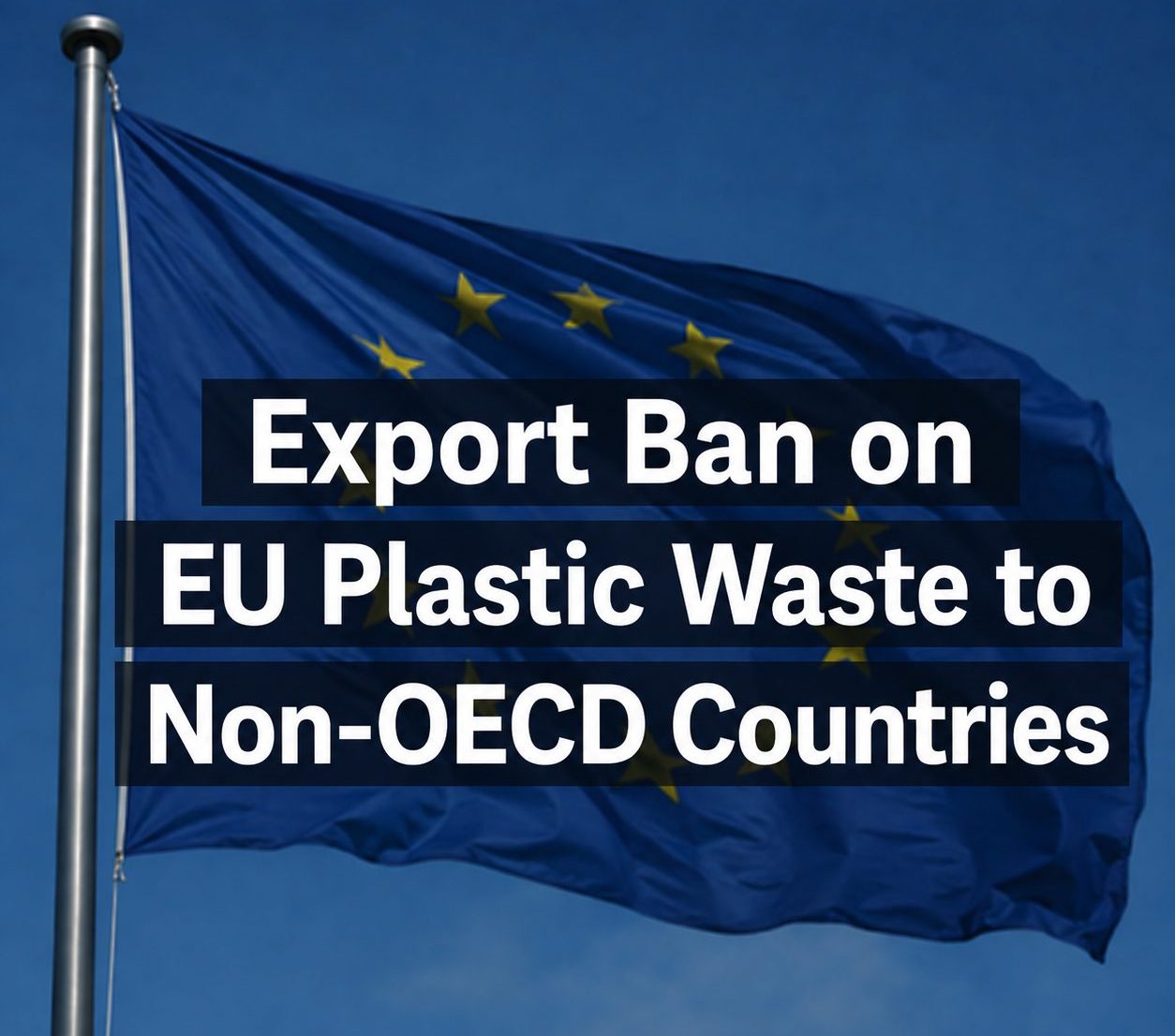
On November 21, 2026, the official ban on the export of EU plastic waste to non-OECD countries will take effect.
Although the regulation has been in force since May 20, 2024, it grants companies and member states phased transition periods.
The first major changes took effect in May 2026: Since then, waste exports have been required to be processed through the new digital system DIWASS (Digital Waste Shipment System).
The absolute export ban to non-OECD countries will finally take effect in November and will initially remain in place for at least two and a half years.
Why is this ban being introduced?
- Waste responsibility: The EU takes responsibility for its own waste instead of exporting environmental problems.
- Problem-solving: A response to illegal disposal and poor conditions in recipient countries.
- Environmental protection: Plastic waste should no longer burden global ecosystems.
- Circular economy: Waste remains in Europe as a secondary raw material.
Which countries are affected?
- Non-OECD countries: Strict, temporary export ban on plastic waste. At the earliest, following a comprehensive evaluation by the EU by May 2029, third countries may apply for a waiver if they can demonstrate environmental and labor standards equivalent to those of the EU.
- OECD countries: Exports to countries such as Turkey remain permitted but are subject to stricter regulations. As of May 2026, prior written notification (PIC) is required. An independent audit requirement will follow starting in May 2027.
Current Situation
Countries such as Malaysia, Indonesia, and Vietnam have often served as dumping grounds for EU plastic waste. This allowed companies to maintain the illusion of recycling in their ESG reports, while the waste actually ended up in opaque landfills. The reason for this was a historical loophole in the law: as soon as plastic waste is handed over to a certified exporter, it is legally considered “recycled.” What actually happened to it in the destination country afterward was not tracked in ESG reports.
Goals and Expectations
- Transparency: Waste is digitally recorded via the new DIWASS system. Following a transition period for green waste, the system will operate fully digitally starting in 2027. This reduces bureaucracy and makes illegal trade more difficult.
- Resource Security: Keeping secondary raw materials within the EU reduces strategic import dependencies.
- Climate neutrality: Local recycling in Europe sustainably reduces CO₂ emissions from industry.
Do you have specific questions about your EPR obligations? Contact us!
 www.ecopv-eu.com/en/contact/ |
  E-Mail: info@ecopv-eu.com
 Supported over 20,000 customers with EPR compliance
Rated 5.0 on Google
Contact
We look forward to your message!