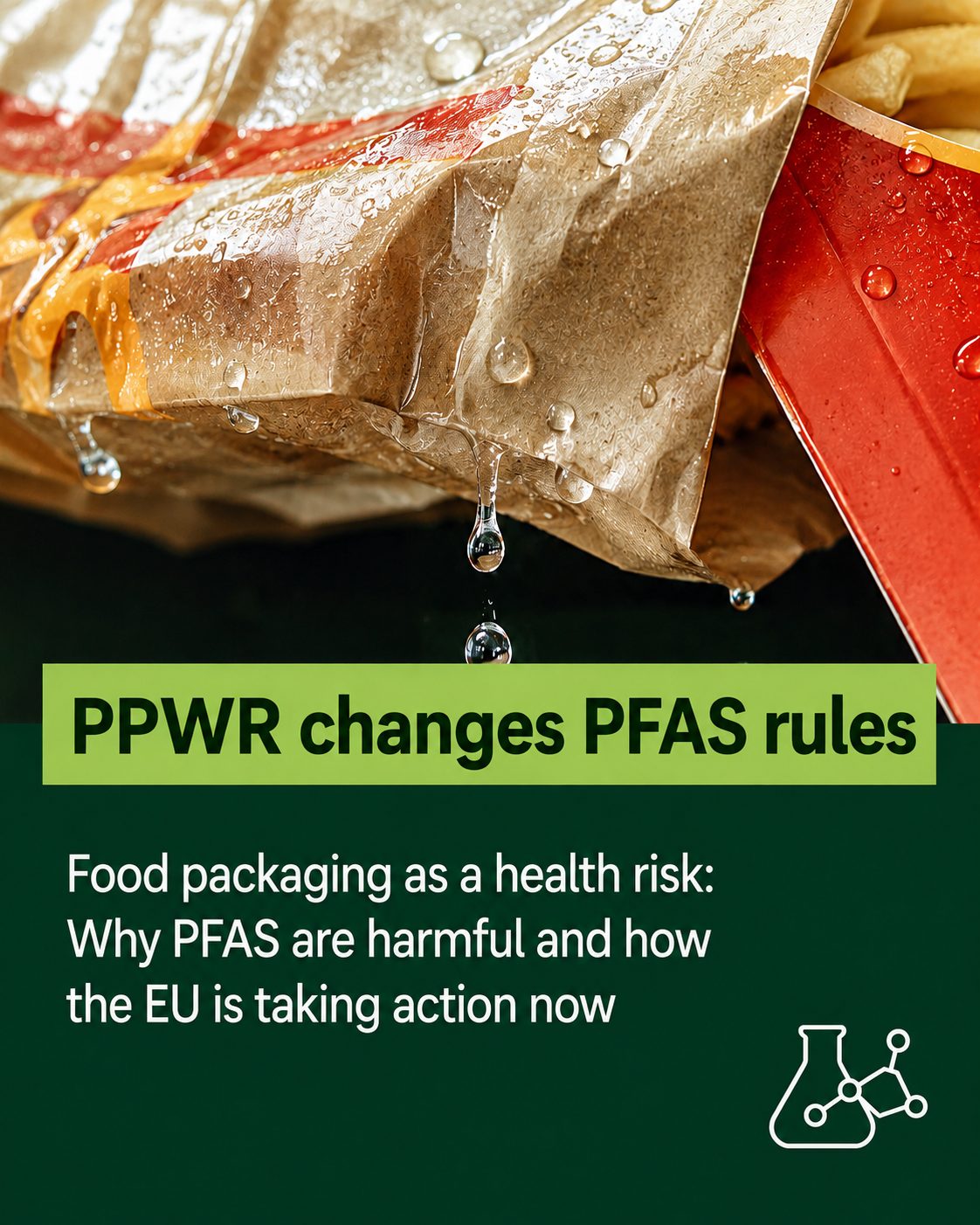
Grease- and water-repellent food packaging – such as fast-food wrappers, french fry bags, or pizza boxes – often contains PFAS. These substances are referred to as “forever chemicals” because they break down very slowly in the environment and in the human body, where they can accumulate.
How do these substances get into food?
PFAS can migrate from the coating into food. This is particularly facilitated by:
- Fatty foods
- Moist foods
- High temperatures (e.g., when packaging freshly prepared meals)
Even the smallest amounts regularly ingested through food can cause chronic health damage over the long term.
Possible Health Consequences
Regular exposure to PFAS can cause long-term health damage. These substances weaken the immune system, reducing the effectiveness of vaccinations and making the body more susceptible to infections.
In addition, the chemicals disrupt hormonal balance and reduce fertility. In newborns, this can lead to a lower birth weight.
Metabolism is also affected by these substances. Blood cholesterol levels rise, and the risk of diabetes increases. Certain PFAS compounds, particularly PFOA, are officially classified as carcinogenic to humans.
Which types of packaging are particularly affected?
Typical sources in everyday life include:
- Fast-food packaging: Classic French fry bags, burger wrappers, and coated wrapping paper.
- To-go containers: Disposable tableware made of cardboard, paper, or molded plant fibers such as sugarcane.
- Pizza boxes: Here, the coating acts as a barrier against grease from cheese, sauces, and oils.
- Baking paper: Some conventional baking papers available in stores use PFAS compounds instead of a silicone coating.
How must fast-food chains, restaurants, and similar businesses adapt?
With the European Packaging Regulation (PPWR), new requirements for PFAS in food contact materials will take effect on August 12. In the future, very low limit values for PFAS will apply to packaging that comes into contact with food. As a result, many coatings currently in use will effectively be phased out of the market.
Fast-food chains, restaurants, and delivery services should therefore review their packaging well in advance and request appropriate proof of compliance from their suppliers. At the same time, PFAS-free alternatives – such as those based on plant-derived waxes, modified starch, or other suitable barrier technologies – are becoming increasingly important. Reusable packaging can also help meet the new requirements in the long term.
Are you already PPWR-ready, or do you need help with implementation? Contact us!
 www.ecopv-eu.com/en/contact/ |
  E-Mail: info@ecopv-eu.com
 Supported over 20,000 customers with EPR compliance
Rated 5.0 on Google
Contact
We look forward to your message!