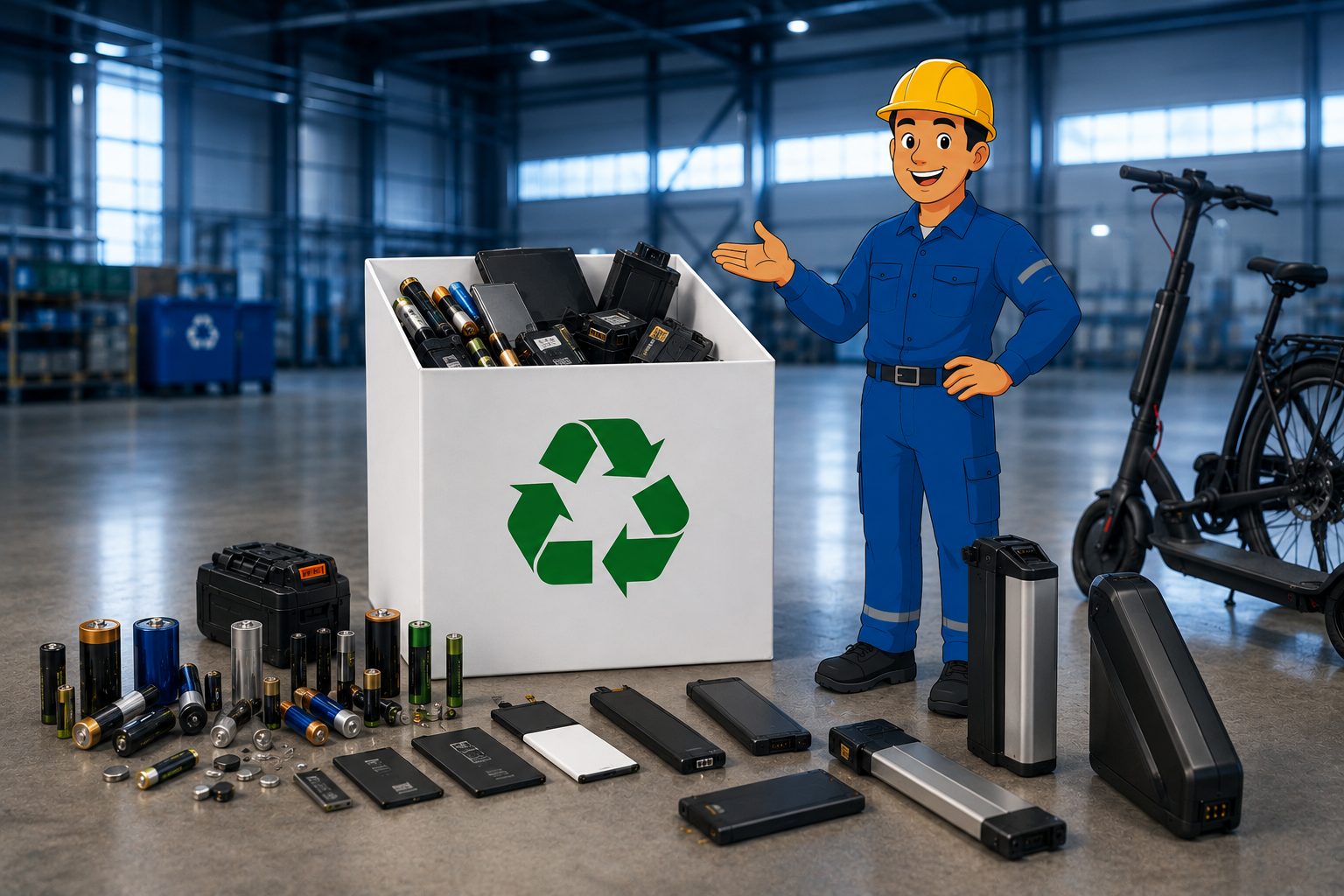
With the new Battery Act Implementation Act (BattDG) and the EU Battery Regulation, stricter rules for disposal and recycling are now in effect. The EU is raising minimum collection rates to keep critical raw materials such as lithium, cobalt, and nickel in the circular economy.
Collection Targets
- Portable batteries: In Germany, the 50% rate will remain in effect through 2026. By the end of 2027, this will rise to 63% across the EU, and to 73% by 2030.
- LMT batteries (e-bikes/e-scooters): Recycling centers must already accept these separately. The targets are 51% by the end of 2028 and 61% by 2031.
Current Status
Although collection volumes for portable batteries are steadily increasing, Germany faces significant challenges in meeting the upcoming EU targets:
- Portable batteries: A collection rate of only 56% was projected for Germany in 2025. While this puts the country above the current legal minimum of 50%, it still falls significantly short of the EU rate of 63% required starting in late 2027.
- Lithium-ion batteries & LMT batteries: The situation is particularly critical for lithium batteries (e.g., from smartphones, e-bikes, or e-scooters). Here, the actual return rate currently stands at only about 25% to 30%. There is thus a massive gap to the first binding target of 51% in 2028. Reason: A large portion of the batteries remains unused in households or is disposed of with household waste.
Necessity
- Fire hazard: Improperly disposed-of batteries are increasingly causing fires in garbage trucks and sorting facilities.
- Securing raw materials: Recycling protects against dependence on imports. Starting in 2031, the EU will also mandate recycling quotas for new batteries.
- Climate protection: Reuse results in massive CO₂ savings. New EU requirements, such as the digital battery passport, also enforce transparency.
What is being done now
- Vape take-back (effective July 1, 2026): Every kiosk, gas station, and supermarket must accept single-use e-cigarettes free of charge, unconditionally, and regardless of brand. The new rule is intended to prevent dangerous lithium-ion batteries from ending up in regular household waste.
- The “counter model”: The counter model at recycling centers requires citizens to hand over hazardous waste electrical equipment containing batteries (such as disposable e-cigarettes) directly to trained staff, rather than throwing them into containers themselves, to prevent fire hazards caused by damage.
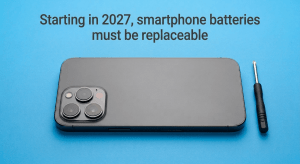
- Design Requirements (Effective February 2027): Batteries in smartphones, tablets, and e-bikes may no longer be glued in place but must be easily replaceable by the consumer.
EPR Compliance Questions about batteries?
Contact us for a comprehensive consultation!
 www.ecopv-eu.com/en/contact/ |
  E-Mail: info@ecopv-eu.com
 Supported over 20,000 customers with EPR compliance
Rated 5.0 on Google
Contact
We look forward to your message!