Since July 3, 2021, single-use plastic straws may no longer be placed on the market in the EU. The directive was adopted in 2019 to drastically reduce the amount of plastic waste in the environment.
How much plastic will be saved?
Exact figures are unknown, but the estimates are staggering: While the European Commission estimated annual consumption at 36.4 billion plastic straws, environmentalists put German consumption alone at up to 40 billion straws.
Why the ban makes sense
The ban reduces littering and microplastics in waterways. The 10 most commonly found single-use plastic items – which include straws – account for over 80% of ocean waste in the EU. Furthermore, the ban aligns with the EU’s strategy to reduce the consumption of single-use plastics and promote the circular economy.
How long have alternatives been around?
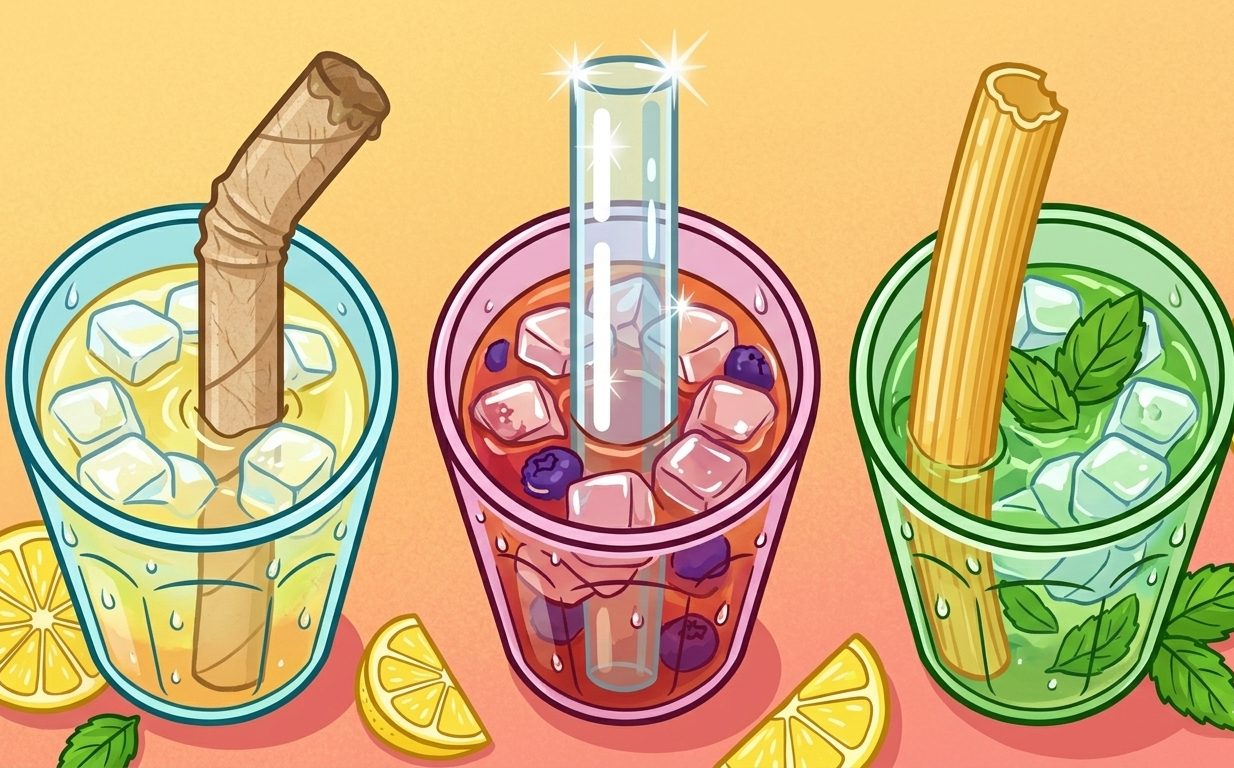
Alternative drinking straws are not a modern invention. In fact, Marvin Stone patented the first paper straw as early as 1888, before it was almost completely replaced by cheap plastic in the 20th century.
Glass and metal straws have long been known as reusable alternatives, but only became more visible in everyday life with the plastic ban.
Pasta straws, on the other hand, are a much newer niche solution and have only started appearing more prominently on the market in recent years.
What the alternatives offer
- Paper: The most cost-effective mass-market solution. Drawback: The “soggy effect” often sets in after just a few minutes.
Studies (e.g., from Belgium, 2023) also detected PFAS (forever chemicals) in many samples, which are used for waterproofing. - Glass is tasteless, reusable, and high-quality, but it requires cleaning and is more prone to breakage. Additionally, its production is energy-intensive.
- Pasta is a creative single-use alternative – biodegradable and edible – but it’s only suitable for cold drinks and not for people with gluten intolerance.
Acceptance check
- 1st place: Glass straws. They achieve the highest satisfaction ratings. Users appreciate their neutral taste, high-quality feel, and ease of cleaning.
- 2nd place: Pasta straws. Considered a fun “party gag” with ecological benefits. They are significantly sturdier than paper straws, even if they may have a slight taste of their own.
- 3rd place: Paper straws. The mouthfeel and aftertaste often lead to a negative perception of the entire drink.
Looking ahead
The future belongs to a mix of reusable and natural materials. But the biggest lever is a shift in mindset: Many drinks don’t need a straw at all. Consistently going without and providing straws only upon request are the most effective ways to avoid waste.
Contact us for comprehensive advice on your compliance issues relating to electrical and electronic equipment, packaging, batteries, and PV panels.
 www.ecopv-eu.com/en/contact/ |
  E-Mail: info@ecopv-eu.com
 Supported over 20,000 customers with EPR compliance
Rated 5.0 on Google
Contact
We look forward to your message!