
A PPWR lab report can take longer to obtain than the accompanying paperwork. A guest article by Lappa on edie, published on 10 November 2026, describes around six weeks between requesting a report and receiving it in the author’s practice. Documentation can be prepared much faster when the necessary information and evidence already exist. Six weeks is therefore a service provider’s experience, rather than a statutory deadline or a laboratory turnaround guarantee.
PPWR lab report: What evidence is needed?
Regulation (EU) 2025/40 generally applies from 12 August 2026, with some requirements taking effect later. Before placing packaging on the market, the responsible manufacturer must assess compliance with the requirements that apply to it. The manufacturer prepares technical documentation and draws up the EU declaration of conformity on that basis. Identify this role in the actual supply chain: private-label arrangements and the special rule for certain micro-enterprises can affect responsibility.
Annex VII provides for internal production control under Module A. This procedure does not require certification by an independent certification body. The technical file includes, wherever applicable, descriptions, materials, a risk assessment, assessment methods and test reports. A signed declaration alone does not replace the supporting evidence.
Substance limits and relevant reports
Article 5 generally limits the combined concentration of lead, cadmium, mercury and hexavalent chromium in packaging or packaging components to no more than 100 mg/kg. Applicable derogations and other substance restrictions need separate consideration. Food-contact packaging must also comply with the PFAS limits in Article 5(5). The scope of testing and the analytical methods must cover the relevant substances and materials.
This does not create a blanket requirement to commission a new external laboratory test for every individual package. The question is whether reliable evidence represents the actual packaging. Existing reports may be usable where their relevance is documented. Where suitable evidence is missing, agree targeted testing with appropriate specialists.
PPWR lab report: Changes and record retention
Changes to materials, coatings, suppliers or manufacturing processes can affect whether existing evidence remains representative. Assess whether renewed conformity assessment and additional tests are needed. A report’s age alone does not determine whether it is suitable.
The EU declaration of conformity and technical documentation must be retained for five years after single-use packaging is placed on the market, or ten years for reusable packaging. Importers also have checks to perform before market placement to verify that the relevant manufacturer obligations have been met.
What companies should plan now
- Request information early: Collect specifications, material data and available reports before ordering.
- Identify evidence gaps: Compare packaging types, substance coverage and test methods before commissioning work.
- Confirm actual lead times: Allow for sample shipping, laboratory work and technical questions; use six weeks only as an illustration.
- Control release: Issue the declaration once conformity has been demonstrated, and document responsibilities in the supply chain.
Keep the packaging version and its supporting evidence linked so that purchasing or production changes trigger a review. This makes it easier to identify which products an existing report can legitimately cover.
ECOPV-EU supports the assessment of PPWR obligations, EPR registration and compliance scheme participation. This article provides general information and does not constitute legal advice.
Sources: edie/Lappa, 10 November 2026; PPWR, Articles 5, 15, 18 and Annex VII; Bureau Veritas. Checked on 12 November 2026.
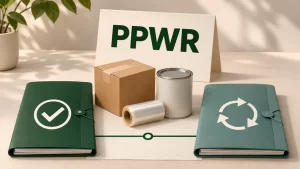
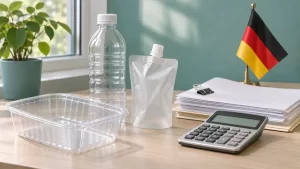
AI-generated concept illustration; not an official certification.
Contact
Questions about packaging, battery or electrical equipment compliance? We look forward to hearing from you.
Frankfurter Str. 70–72
65760 Eschborn, Germany