Starting February 18, 2027, a strict requirement will take effect in the EU: device batteries in end products must be installed in such a way that consumers can easily remove and replace them themselves. This is intended to extend the product’s lifespan and increase the recycling rate.
Until now, primarily medical devices and splash-proof wet appliances (e.g., electric toothbrushes) were exempt from the end-user replacement requirement for safety and hygiene reasons. Now, the European Commission has expanded the list of exemptions by six new product categories via a delegated act.
The new exemptions at a glance
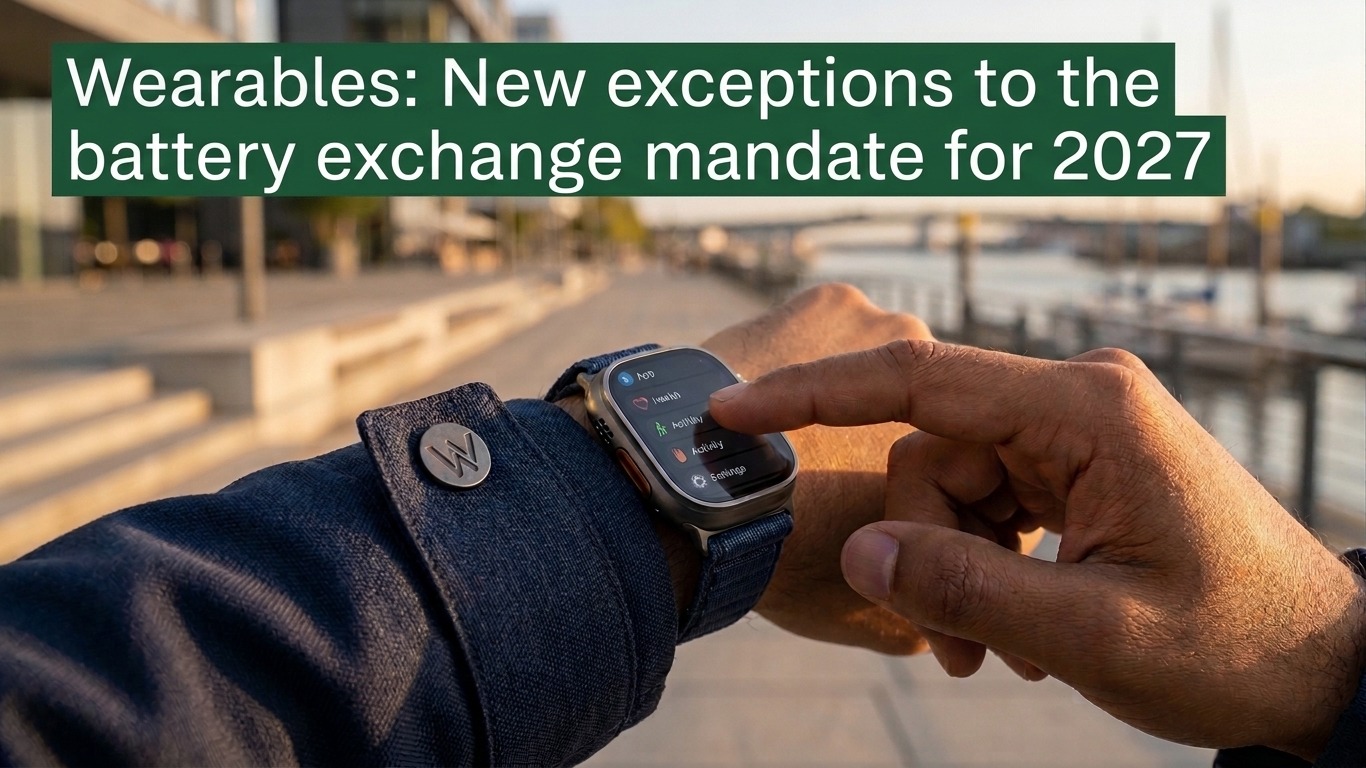
• Wearables: Smartwatches and fitness trackers.
• Toys: Electric toys (in line with the new EU Toy Safety Directive).
• Special equipment: Devices covered by the ATEX Directive for potentially explosive atmospheres (e.g., protected motors, pumps, sensors).
• Special categories: Among others, body-worn medical dosing systems and wireless food temperature probes.
Important for manufacturers: These exceptions do not completely exempt manufacturers from the requirement to allow for battery replacement. While the battery in the devices mentioned may be permanently installed, it must still be replaceable by independent qualified technicians.
Furthermore, the exemption applies only if the devices meet specific requirements regarding leak-tightness, hygiene, or explosion protection. At the same time, the Commission has published updated practical guidelines for implementation.
Special Rule for Smartphones and Tablets
As of February 18, 2027, smartphones and tablets will generally be subject to the requirement for consumer-friendly battery self-replacement—however, there is one important exception.
The EU Battery Regulation allows manufacturers to continue installing and gluing the battery in place, provided the devices are particularly durable and robust. To qualify for this exception, smartphones must meet two strict conditions simultaneously:
• Particularly durable battery: The built-in battery must retain at least 80% of its residual capacity after at least 1,000 charging cycles. (The standard minimum requirement under the Ecodesign Regulation is 800 cycles.)
• Full water protection: The device must be certified as dust- and water-tight according to protection class IP67 or higher (protection against temporary submersion).
Contact us for comprehensive compliance consulting on electrical equipment, batteries, packaging, and PV panels – and subscribe to our newsletter to stay up to date on laws and trends.
 www.ecopv-eu.com/en/contact/ |
 E-Mail: info@ecopv-eu.com
 Supported over 20,000 customers with EPR compliance
Rated 5.0 on Google
Contact
We look forward to your message!