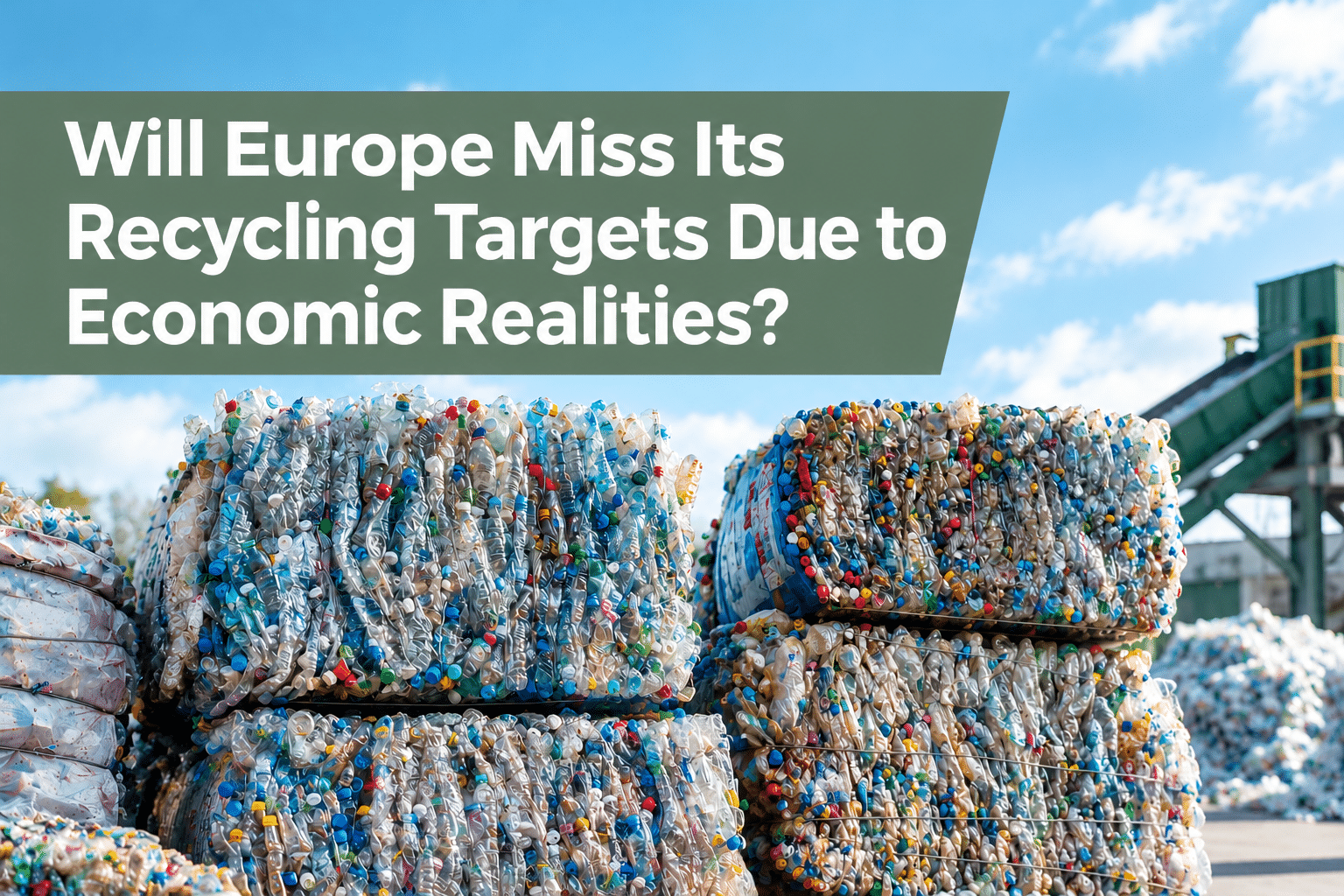
The European recycling industry is experiencing a drastic decline.
According to data from the Plastics Recyclers Europe (PRE) association, the industry has reduced its recycling capacity by approximately one million metric tons over the past three years. Without market stabilization, the industrial base for Europe’s sustainability goals will shrink.
Unfair price competition and import pressure
• Cost trap: While processing costs are fixed, prices for virgin fossil-based materials are falling. According to ICIS market data, the price gap between virgin and recycled HDPE narrowed to 125 euros per metric ton in August 2026 (after reaching a peak of 1,140 euros per metric ton at times earlier in the year)
• Slump in sales: As soon as virgin material becomes cheaper, sales of recycled material plummet. The result was a 5.5 percent decline in industry revenue in 2024 and the first permanent plant closures.
• Import share: Already 19 percent of Europe’s demand for circular plastics is met by imports from non-EU countries. The bvse (Federal Association for Secondary Raw Materials and Waste Management) is calling for uniform environmental standards and comprehensive documentation in this regard.
The PPWR’s Timing Problem
The mandatory minimum recycled content requirements do not take effect until 2030. Yet recyclers must make investments in new facilities today.
This is precisely where a dangerous gap lies:
Because cheap new fossil-based materials are flooding the market, sales of recycled materials are currently plummeting.
As a result, recycling companies lack the necessary revenue and any planning certainty for expansion. If the industry collapses now due to a lack of demand, by 2030 there will be a shortage of precisely the capacity that would be absolutely necessary to meet the legal quotas.
Key Demands of the bvse for Market Stabilization
• Mandatory usage quotas for recycled materials even before 2030.
• Green public procurement with concrete purchase commitments.
• Eco-modulation to create financial incentives for product design suitable for recycling.
• Competitive energy prices and consistent reduction of red tape.
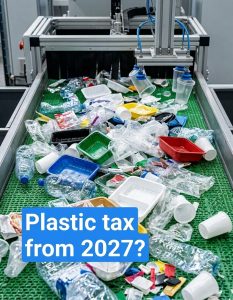
• A halt to additional national taxes: The bvse calls on the federal government to abandon the planned national plastic tax. A flat-rate levy on plastic used would only further disadvantage German processors and recyclers in international competition, rather than achieving targeted steering effects.
Contact us for comprehensive compliance consulting on electrical equipment, batteries, packaging, and PV panels – and subscribe to our newsletter to stay up to date on laws and trends.
 www.ecopv-eu.com/en/contact/ |
 E-Mail: info@ecopv-eu.com
 Supported over 20,000 customers with EPR compliance
Rated 5.0 on Google
Contact
We look forward to your message!