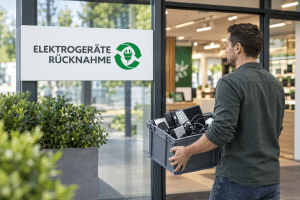
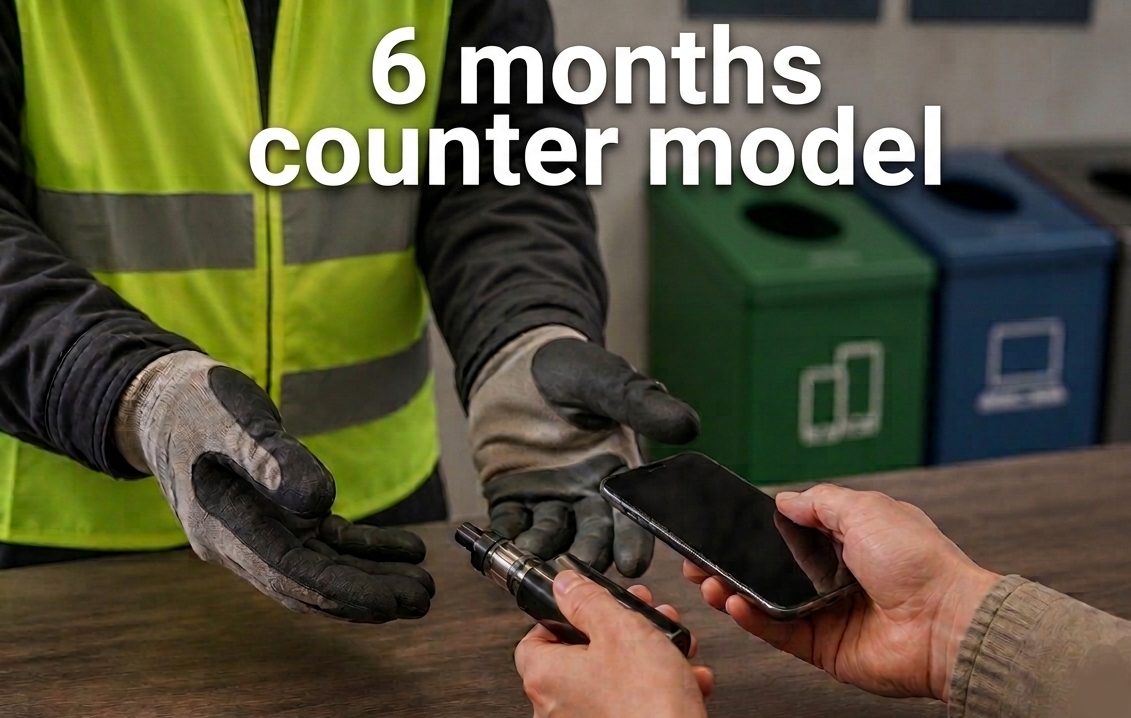
The latest amendment to the Electrical and Electronic Equipment Act (ElektroG4) has been in effect since January 2026. A key component of this reform is the mandatory counter model at the drop-off points operated by public waste management authorities.
The goal of this measure is to significantly minimize incorrect filling, damage, and the acute fire hazard posed by damaged lithium-ion batteries.
In practice, this meant a significant adjustment for the teams on site.
However, the interim results show that the effort is worth it. Every controlled action ensures maximum safety at collection points and in recycling facilities and secures valuable raw materials for the circular economy.
An overview of the two core rules:
- Filling by staff only (Groups 2, 3, and 5): Containers for monitors, lamps, small appliances, and IT/telecommunications accessories may, without exception, be filled only by qualified staff of the public waste management authority. Residents are no longer permitted to deposit these items themselves.
- Filling under supervision (Groups 1, 4, and 6): Large appliances, heat exchangers, and PV modules may be delivered and sorted by citizens themselves – but always under the direct supervision of staff.
Vapes & Devices with Built-in Batteries: Where to Dispose of Them?
Disposable e-cigarettes (vapes) and all devices with built-in batteries (e.g., electric toothbrushes, Bluetooth speakers, or smart textiles) are legally classified under Collection Group 5 (small appliances).
The following applies to these items:
- Drop off only with trained staff: These devices must not be placed in collection containers on your own.
- Minimize fire risk: Since the lithium-ion batteries are permanently integrated, the risk of short circuits is extremely high if the devices are disposed of improperly.
What else should you keep in mind?
To reduce wait times at collection points and increase safety, residents should observe the following:
- Remove batteries (if possible): If the battery is not permanently installed in the device, it must be removed before disposal and placed separately in the battery collection box.
- Tape over the terminals: For loose lithium batteries and rechargeable batteries, the terminals should be insulated with tape beforehand to prevent sparks.
- Caution with defective batteries: Damaged or swollen rechargeable batteries must be reported to staff. They belong in special safety containers.
Do you have questions about EPR compliance under the BattDG, ElektroG, or VerpackDG? Just send us a message!
 www.ecopv-eu.com/en/contact/ |
  E-Mail: info@ecopv-eu.com
 Supported over 20,000 customers with EPR compliance
Rated 5.0 on Google
Contact
We look forward to your message!