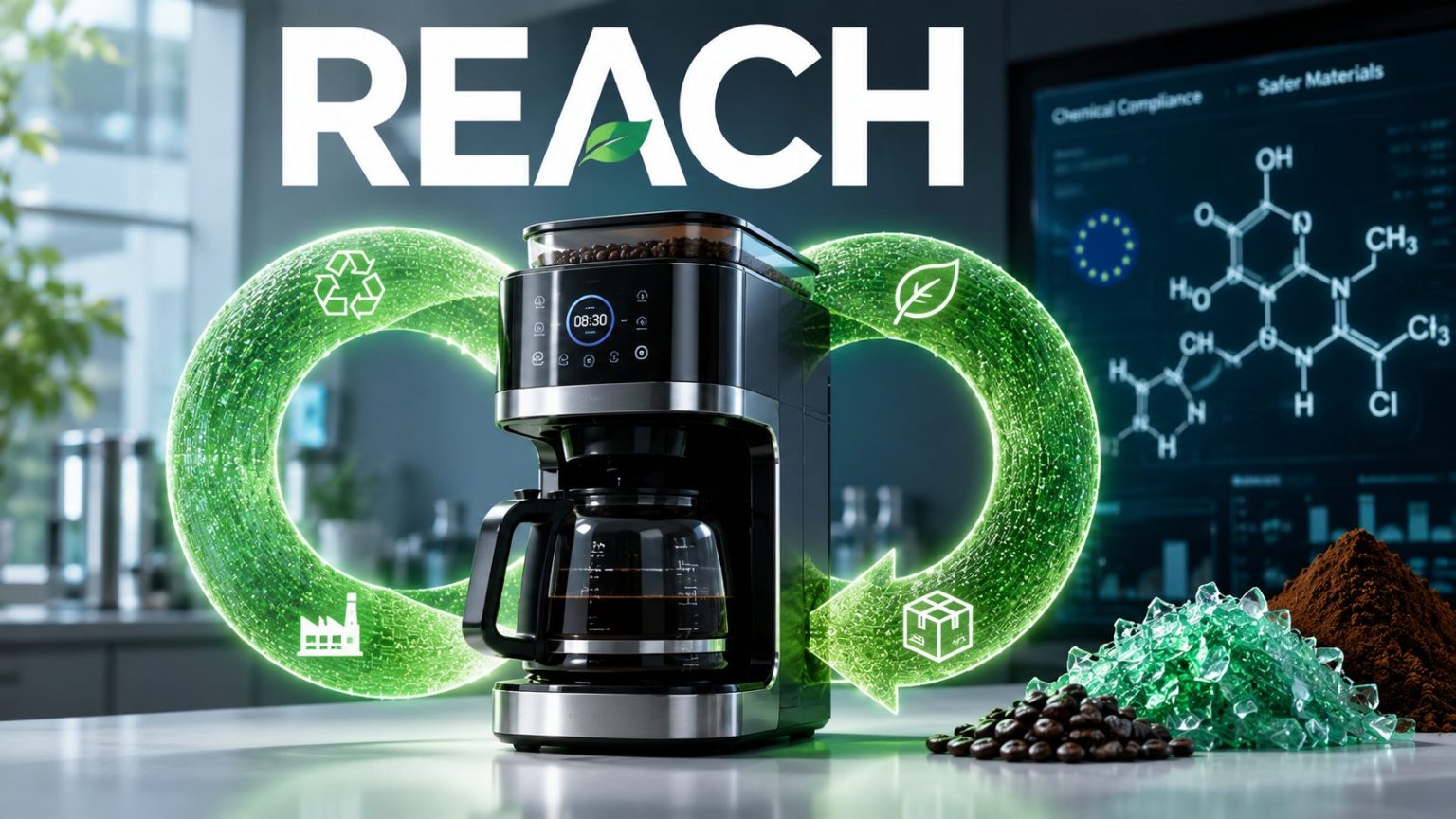
The EU is drastically tightening its regulations on chemicals. This no longer affects just the chemical industry, but everyone who manufactures, imports, or sells consumer goods.
Key facts at a glance:
- Hidden risks: Hazardous substances are often found unnoticed in everyday products – such as PFAS in textiles or plasticizers in plastics.
- Stricter laws: The new EU Ecodesign Regulation (ESPR) and stricter REACH requirements mandate that circular products be completely free of hazardous substances.
- Stricter Liability: Under Extended Producer Responsibility (EPR), suppliers must take full responsibility for the entire life cycle and recycling of their products.
- The Core Problem: A product can only be recycled safely and legally if it is free of toxic substances.
Three Current Developments Under REACH
1. Stricter Criteria and Higher Costs
The criteria for substances of very high concern (SVHC) have been tightened. New risks, such as endocrine-disrupting effects or extreme persistence (e.g., PMT substances), are leading to bans more quickly. This has direct financial consequences: Under the Extended Producer Responsibility (EPR) framework, companies pay significantly higher recycling fees for products containing hazardous substances (eco-modulation).
2. Bans on Entire Substance Groups Instead of Individual Substances
The European Chemicals Agency (ECHA) rarely evaluates individual substances anymore; instead, it assesses entire substance groups at once. For companies, this means that a banned substance can no longer be easily replaced with a chemically modified variant. If a substance group (such as PFAS) is affected, the entire material class is usually off-limits for production.
3. Mandatory transparency through digital documentation
The REACH reporting requirements are closely intertwined with the new EU Ecodesign Regulation (ESPR). Companies must document exactly which substances are contained in components as early as the product design phase. Through the SCIP database and the upcoming digital product passport, this data must be transparently shared throughout the entire supply chain all the way to the recycler.
Conclusion
Chemical regulations and the circular economy are inextricably linked. Companies that do not have a complete understanding of their materials risk far more than just high EPR fees. Only products free of hazardous substances remain marketable in the long term and meet ecodesign requirements.
Proactive substance screening is not a burdensome bureaucratic task; rather, it effectively protects your company from sudden sales bans and costly recalls.
Questions about EPR compliance? Send us a message!
 www.ecopv-eu.com/en/contact/ |
  E-Mail: info@ecopv-eu.com
 Supported over 20,000 customers with EPR compliance
Rated 5.0 on Google
Contact
We look forward to your message!