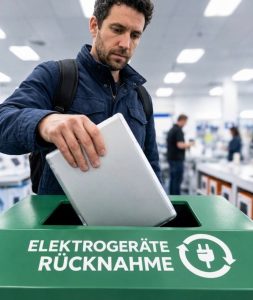

AI-generated conceptual illustration of environmental claim checks; not an official certification.
The EmpCo Directive has tightened the rules on environmental advertising to consumers since 27 September 2026. It is based on Directive (EU) 2024/825. Manufacturers and retailers should review packaging, online shops and social media. Evidence alone does not make every statement lawful: some advertising practices are expressly prohibited.
What the EmpCo Directive prohibits
The new rules address several specific practices:
- Generic environmental claims: Terms such as “eco-friendly” or “green” are prohibited without recognised excellent environmental performance relevant to the claim. Clear, prominent wording on the same medium can make a claim specific, but it must still be accurate.
- Non-compliant sustainability labels: A label must be based on a compliant certification scheme or established by a public authority.
- Claims with the wrong scope: An advantage of the packaging must not be presented as an advantage of the entire product. A claim about a whole business must not merely concern one specific activity.
- Offset-based product claims: A product must not be advertised as climate neutral, or as having a reduced or positive climate impact, on the basis of greenhouse gas offsetting.
- Legal requirements presented as special benefits: Requirements applying to all products in the relevant category on the EU market must not be promoted as a distinctive feature of a trader’s offer.
Broad words such as “sustainable” require particular care. They can include social as well as environmental characteristics. Evidence of one environmental benefit does not automatically substantiate such a wide claim.
Future environmental promises need a verifiable plan
Promises such as “climate neutral by 2030” require clear, objective, publicly available and verifiable commitments. A detailed, realistic plan must include measurable, time-bound targets and the resources needed to achieve them. In addition, an independent external expert must regularly check progress. Consumers must have access to the findings. Germany implements these requirements in section 5 UWG.
The EmpCo Directive in Germany: UWG and existing stock
Germany has implemented the requirements through its Act against Unfair Competition, the UWG. Infringements can result in injunction claims and formal warnings by parties entitled to enforce the rules. Eligibility depends on the applicable legal conditions.
Existing stock needs a separate assessment. The European Commission points to a proportionate enforcement approach for certain old-stock situations. This does not create a general postponement of the advertising rules. Businesses should check the relevant national provisions and their actual stock situation.
What manufacturers and retailers should do now
First, list every environmental claim, including images, symbols, data sheets and social posts. Next, identify exactly what each statement refers to and assemble current evidence. Remove prohibited claims and replace vague wording with specific, verifiable information. Also review labels, approval procedures and translations.
The EmpCo Directive creates common EU requirements. However, national enforcement and individual circumstances still matter. EPR registration is not proof that a product is environmentally friendly overall.
ECOPV-EU supports manufacturers and retailers with EPR obligations for packaging, electrical equipment and batteries in Germany and across Europe. This article provides general information and does not constitute legal advice.
Sources: Directive (EU) 2024/825, European Commission, section 5 UWG and Germany’s environment ministry. Checked on 27 October 2026.